
Are you one of those who reflect on themselves before the new year? Those who make decisions, plan brand-new beginnings or endings, and see a new year as an opportunity to renew themselves as well?
Of course, a magic wand doesn’t touch our lives at midnight on the last night of the year and change everything, but at least it gives us the chance to review everything we have experienced throughout the year and set a goal in line with our state of mind or needs for that year.
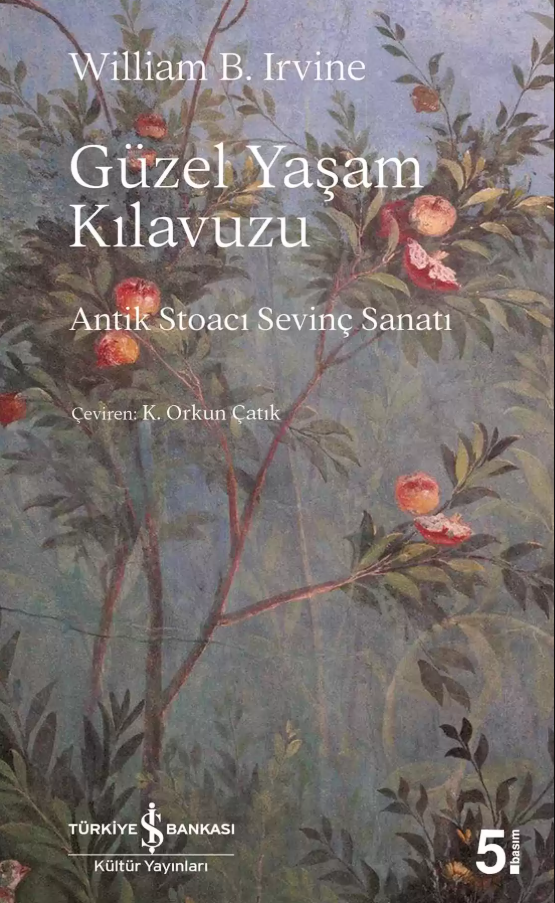
I greatly enjoyed reading A Guide to the Good Life by American philosophy professor William B. Irvine, who specializes in “Modern Stoicism.” The book’s subtitle is The Ancient Art of Stoic Joy. It is written in a clear, accessible tone, showing how Stoicism can be applied in the daily practice of the modern world without the heavy burden often associated with philosophy.
Think of this book as an “introduction to Stoicism.” This ancient philosophy, which teaches living a calm, balanced, and virtuous life by focusing on what one can control and accepting what one cannot, essentially says: “Invest your effort in what you can control, and do not worry about what you cannot.” In doing so, it argues that anxiety decreases, mental clarity increases, and life becomes more peaceful. For those seeking a meaningful and fulfilling life, Stoicism is not only a philosophy but also carries a psychological dimension. The goal of the Stoics is to eliminate negative emotions.
How did I get from New Year’s resolutions to this point? Like this: the following lines I quoted from Irvine’s book opened a window for me. Irvine says, “Among the things you say you ‘pursue’ in life, which one do you think is the most valuable? The culture we live in does not really encourage people to think about such things. On the contrary, it lays out endless forms of entertainment in front of them so that they do not have to. Yet the ultimate purpose of life is the foremost element of a philosophy of life. This means that if you have no purpose in life, you cannot have a coherent philosophy of life either.”
The section in the book on hedonic adaptation became the main framework of my New Year’s resolutions. What does hedonic adaptation mean? Shortly after obtaining something, we desperately want, we begin to take it for granted and desire something even better. For example, we finally get the house of our dreams, but after a while we start wanting a bigger one, one with a better view, or a newer one. The home we dreamed of for years has already become ordinary to us. This psychology also applies to human relationships. Even if we marry the person of our dreams in a love match, over time we stop looking at each other with loving eyes and instead begin to notice each other’s flaws. Because once we adapt to pleasure, a process of dissatisfaction begins. This is precisely where Stoic philosophy steps in, persuading us—through the method of “negative visualization”—to desire what we already have.
Let this be my New Year goal: to live with the mindset that whatever I currently have is the best and the most unique thing for me.
I wish everyone a year where they truly cherish what they already possess.
For Further Reading
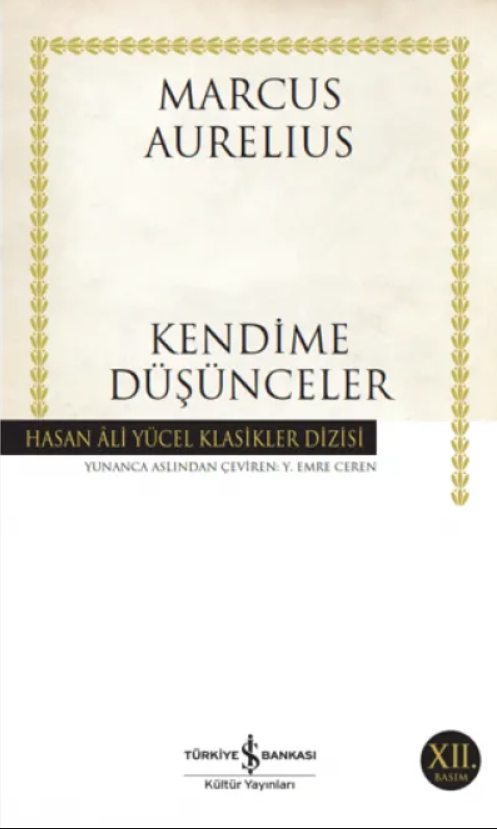
If you enjoy A Guide to the Good Life as much as I did, I recommend two more books to read right after it—both of which are frequently referenced in this book. One is Meditations (Meditationes) by the Roman Emperor Marcus Aurelius. Written not as an emperor but as a human being striving to discipline his inner world, Meditations remains a highly important Stoic guide even today, despite having been written between AD 170 and 180.
The second is Moral Letters (Epistulae Morales), written by the Roman philosopher Seneca to his friend Lucilius, in which he advises on disciplining one’s inner world. This work is also regarded as one of the fundamental cornerstones of Stoic philosophy.