

People sometimes curse others by saying, “May God make you suffer through your children.” I really hate that—what have the children ever done to deserve it? Why should they pay for their ancestors’ wrongs?
I don’t know whether curses actually come true, but I recently read a book that explains—through examples and scientific research—how the sins or virtues of our ancestors can be passed down from generation to generation, much like genes or diseases. It really saddened me.
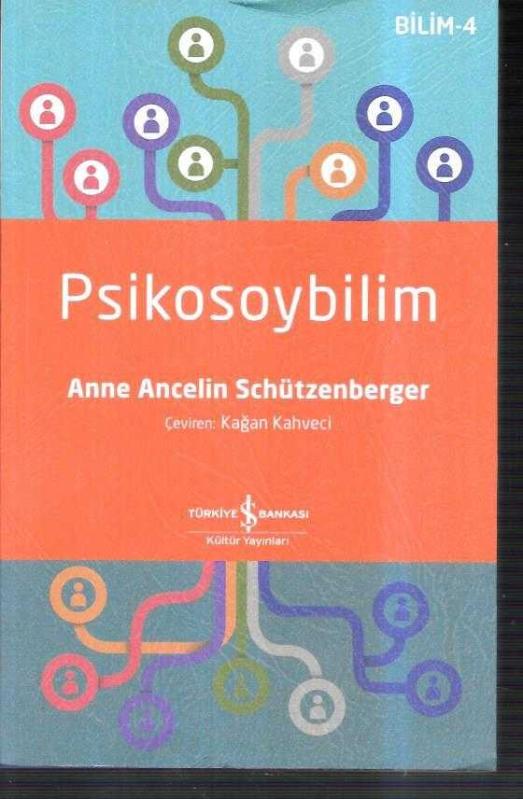
‘Psychogenealogy – Healing Family Wounds and Finding Oneself’ (Psychogenealogie – Guerir les blessures familiales et se retrouver soi), written by the French psychologist Anne Ancelin Schützenberger, explains the effects of family history on individuals’ psychology and life events.
Our life cycles, and the traumas we believe to be without cause, may actually be a legacy inherited from our ancestors…
Experiencing similar illnesses at the same age as some people in our family tree, marrying at the same age, divorcing at the same age, the same accidents, the same professions, sudden losses, feelings of guilt, and traumas may perhaps not be coincidences, but rather an ancestral legacy…
Schützenberger defines this situation as “intergenerational transmission” and underlines the concept of “invisible loyalty.” What is this “invisible loyalty”? Individuals, without being aware of it, remain loyal to their family, perhaps representing a relative they have never met and whose name they do not even know. And from generation to generation, they live and pass on the same story.
The main sentence of the book: A person is not only the heir of their own life, but also of their family’s past.
The “Genosociogram” method described in the book maps our lineage across 7 to 9 generations and makes recurring patterns within the family visible. In this way, it maps all significant events that come to mind—such as death, illness, marriage, divorce, migration, bankruptcy, resignation, slander, family secrets, in other words “what is left unspoken,” and unresolved grief—and gives meaning to complex family relationships.
Now I’m trying to find out who in my family experienced something related to noise or loud sounds, and whose trauma has been passed on to me!
Understanding Cats Is Not That Difficult
When I pick up my phone, I can’t stop watching the cute monkey videos shared by Asians on TikTok. I’m sure they experience the same thing with our cat videos. Especially Istanbul, alongside its cultural heritage, historical structures, and unique beauty, is now world-famous also for its street cats. These animals are truly one of a kind; they are hard to understand. Each of them has a completely different personality. Just like humans, even children born of the same mother differ from one another in temperament.
One of our neighborhood residents (for people from Istanbul, this is the case; cats are as many residents of the neighborhood as we are), Lady Kırpık, understands that it is mealtime the moment she hears food being poured into the bowl and comes over. First she gently lets herself be petted, then politely finishes the food on her plate. But her sister, Lady Duman, is nothing like that! The moment she hears the sound of food being poured, she comes and chases the others away, and she doesn’t settle for her own plate—she eats what is in front of everyone. She also absolutely does not allow herself to be touched or directed.
While thinking, “I wish there were a way to understand and communicate with cats,” I came across The Interpretation of Cats: Understanding the Psychology of Our Feline Companions by veterinarian Claude Béata, who specializes in animal behavior and psychiatry. Despite being scientific, the book is written in clear sentences and supported with examples, shedding light on the relationship cats establish with humans. Moreover, it goes deeper into the roots of behavioral disorders in cats and offers intriguing insights. For instance, I was surprised to learn that meowing is directed more toward humans than as a form of communication between adult cats. It was also reassuring to find out that the stubbornness of cats is not meant to annoy others but is simply part of their nature. Additionally, when cats come and rub their faces against our legs, they are not saying “Pet me quickly,” but rather, “You are part of my territory and my social group.” In other words, in their own language, they are actually accepting me into their lives.
The Interpretation of Cats: Understanding the Psychology of Our Feline Companions is quite a useful book not only for cat owners, but also for those who want to learn and understand animal behavior, especially for people living in Istanbul.