ArtIstanbul Feshane examines Istanbul’s memory of yesterday, today, and tomorrow through hundreds of artworks from the IBB Collections presented under the main title Memory of the Collective until the end of the year. The free exhibition, open until the end of the year, also responds almost with the enthusiasm of a rally to the biennials and contemporary museum pursuits that recall the role Feshane assumed in the past, with 627 works drawn from art history.
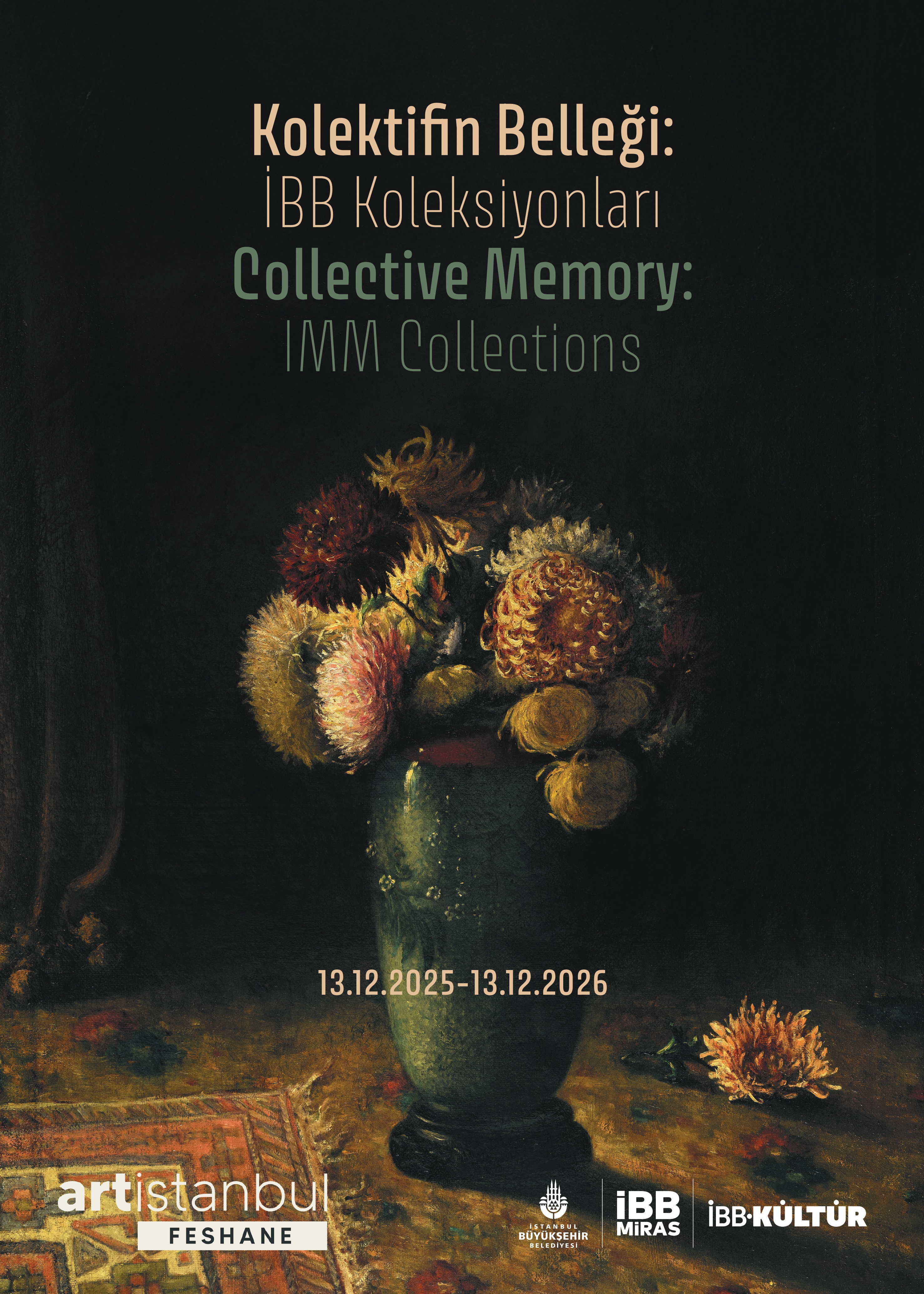
Istanbul Metropolitan Municipality (IBB) Art Collections have continued to be on view at ArtIstanbul Feshane (1) since mid-December of last year. Open until December 13, 2026, the exhibition Memory of the Collective: IBB Collections can be visited free of charge every day except Monday between 10:00 and 20:00. When we take an overall look at the exhibition Memory of the Collective: IBB Collections, it clearly goes on record how elements such as “collective memory” and “urban memory,” which we are familiar with from news bulletins, can become occasions for visible and tangible discussion and analysis.
For one thing, memory is first determined by the sheer scale of the place itself. To briefly recall: Feshane—one of the Ottoman Empire’s first industrial buildings and later one of the centers of the domestic textile industry—already deserves to be remembered, within its very story of existence, as a site of memory. It was here that, during the Istanbul Foundation for Culture and Arts’s Nejat F. Eczacıbaşı era, the dream of establishing an “Istanbul Museum of Contemporary Art” was first conceived, and it also hosted the third Istanbul Biennial, curated by Vasıf Kortun and organized around the theme “Production of Cultural Difference.”
For the “global host” City of Istanbul, which that biennial ‘sensed’ from Istanbul toward the world with the sincerity of a cultural marketplace and which years later Vasıf K. Kortun and Charles Esche tried once again to exhibit with the theme “Istanbul” (3), already and fortunately springs forth quietly from this exhibition with both its art-historical and its social and political reality.
As will also be remembered, Feshane itself was reintroduced to the city on June 22, 2023 under the name ArtIstanbul Feshane, following the restoration process of 2022 carried out by the IBB Heritage team led by names such as Acting Mayor Nuri Aslan, IBB Deputy Secretary General Oktay Özel, and IBB Head of the Department of Culture, Arts and Social Affairs T. Volkan Aslan, in the absence of IBB President Ekrem İmamoğlu, himself a collector together with his wife Dilek İmamoğlu.
Along with the Naile Akıncı Library located in the venue, which contains thousands of volumes, and without forgetting the special book collections of pioneering cultural and art figures inside it, one more thing should also be noted:
With its ninth exhibition, Memory of the Collective: IBB Collections, Art Istanbul Feshane has in fact already put its signature on one of its activities that comes closest to the responsibility of a ‘museum,’ also with the 2024 exhibition Dynamic Eye: Beyond Optical and Kinetic Art: Tate Collection.
The exhibition Collective Memory: İBB Collections reveals yet another exemplary effort toward a civic, pluralistic, democratic museum practice by hosting—no small feat—627 works by 187 artists. It is particularly noteworthy that, during the formation of the exhibition, many individuals and institutions came together side by side through a civic “imece”—a collective, cooperative effort.
When we look at the sources of the exhibition / collection, the layered activity at Feshane is based on the IBB “Resmemaneti” works, which extend back to an initiative to establish a Revolution Museum in 1925 at the Atatürk House in Şişli and which, over time, took shape again in different venues and reached the present day. The event brings together 316 works from the main collections of IBB such as the Atatürk Library, Aşiyan Museum, and City Museum, with 311 works added to the IBB Art Collections through donations from important representatives of the art world, supported by 55 donors.
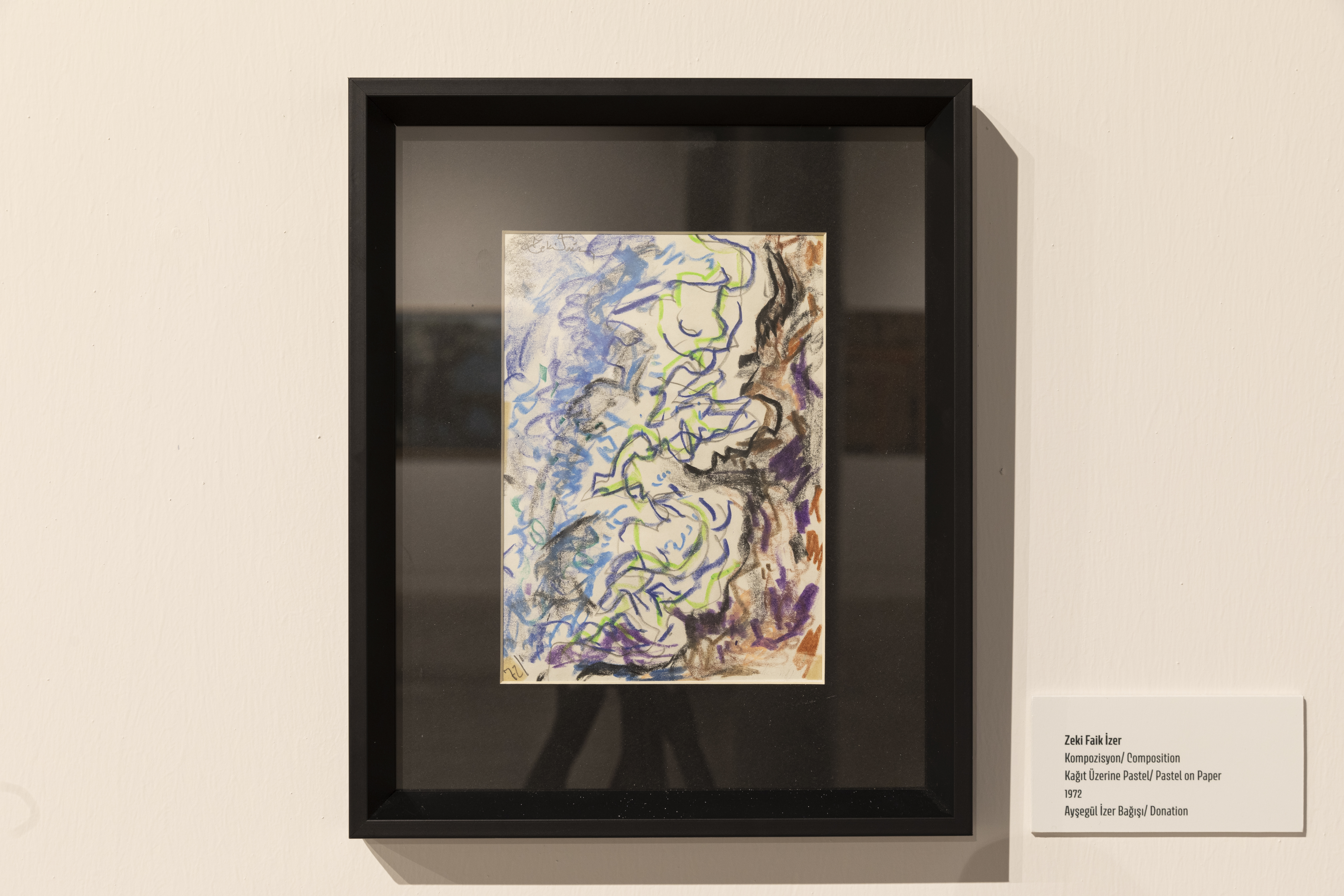
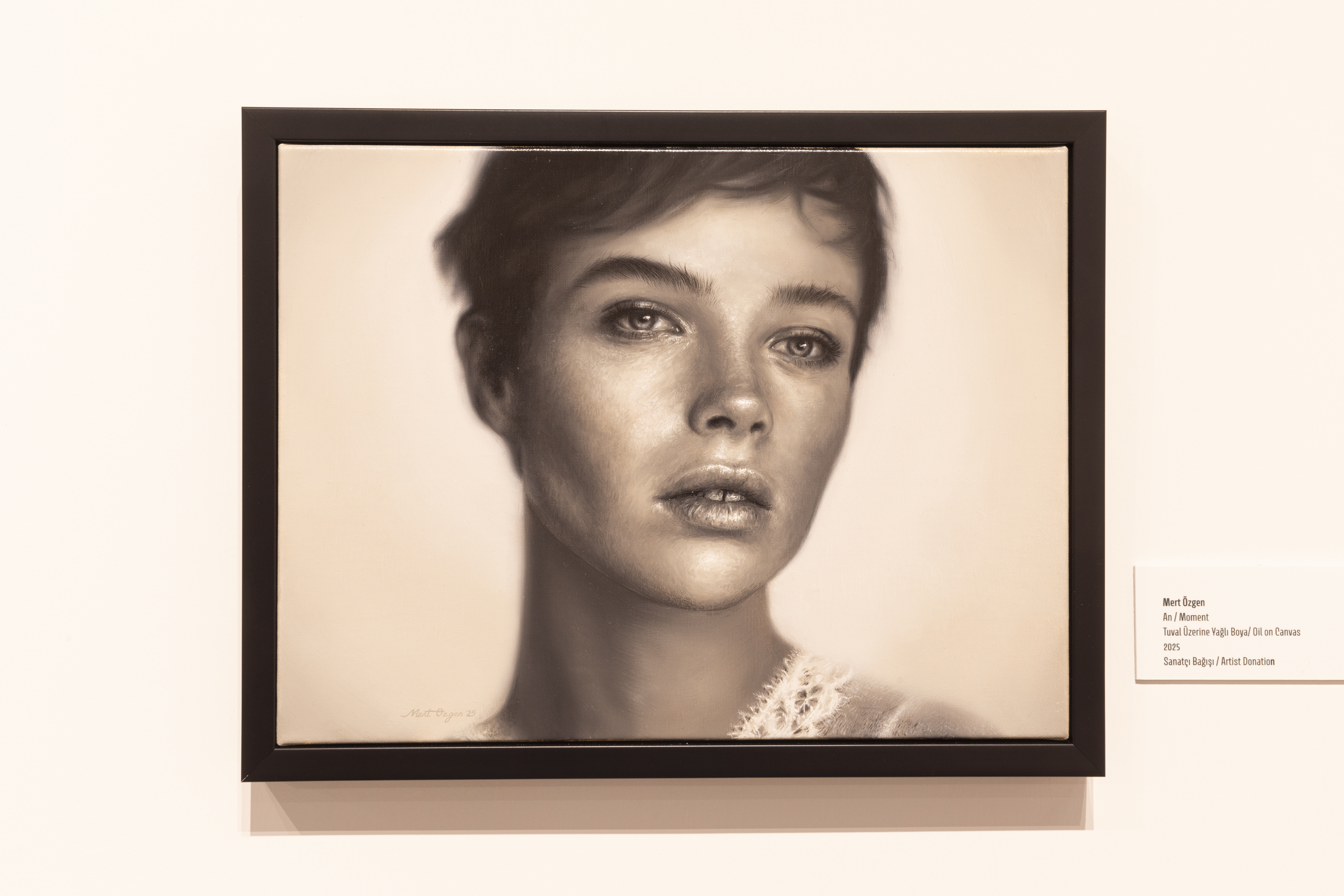
Donations continuing from past to present play a significant role in the formation of the IBB Art Collections. In this context, the exhibition includes a list of hundreds of names, composed of artists and collectors who have donated works. Among these names, it is possible to come across many heirs, artists, and collectors such as Cengiz Akıncı, Genco Gülan, Emel Vardar, Ayşegül İzer, Semiramis Öner, Temür Köran, Tan Cemal Genç, Seydi Murat Koç, Duygu Kahraman, Bilal Yazıcı, Berkay Buğdan, Mert Özgen, Orhan Onuk, Ferit Özşen, Hale Sontaş, Cihat Aral, and Türkân Sılay Rador. This is recorded as an important element determining the exhibition’s civil, pluralistic, and solidaristic structure.
The roots of the IBB Art Collections extend back to the steps of cultural institutionalization that became visible in the 19th century with the Tanzimat, a period of reforms. As IBB emphasizes, “Collections that place Istanbul’s cultural capital, protected in line with the principles of participation and accessibility, into circulation as a right to the city continue to grow with a contemporary approach and as a public archive.”
Again, “…the thematic diversity of the artists included in this collection also addresses Istanbul not only as a place, but as a stage where social relations are produced.”
This also opens the way for ArtIstanbul Feshane to become a massive time/space machine. In this regard, when we look more closely at the reading of the vast exhibition, nourished by thematic texts in Turkish and English, titled The Plural Layers of the City, the Gaze, and Memory, the following important lines are recorded:
“…Paintings that look at Istanbul from different perspectives also function as documents that enable us to analyze the city’s multilayered structure. A change in perspective means the transformation of the relationship the subject establishes with the city; every shift in the representation of space is a visual reflection of the socio-cultural transformations experienced by the modern individual. (…) The exhibition enables us to experience the different layers of the city through the questions of where we view Istanbul from, how we interpret it, and through which regimes of gaze we interpret it.”
So what do we encounter when we look at the exhibition’s lifeblood, the list of artists and works?
First of all, the exhibition awaits to captivate us under certain headings. In the exhibition, while turns such as Istanbul Landscapes, Portraits: Faces and Stories, and Print, Canvas and Contemporary Approaches are encountered, the IMOGA collection pioneered by Süleyman Saim Tekcan also unites on the same level of Feshane with Sezer Tansuğ’s 66 Squares, presented in 1992–1993.
When we look at the inventory of the exhibition’s City Museum Collection, for example, Feyhaman Duran’s portrait of Kanuni Sultan Süleyman radiates a magnetic sincerity, as if the artist had just stepped out of Kanuni’s presence. In the exhibition, which turns into a vast Istanbul rally with its portraits, it is especially necessary to pay attention to Ahmet Ziya Akbulut’s portrait of Kaygusuz Abdal, which can be considered a metaphysical masterpiece. The portrait awaits discovery as a unique masterpiece that eternalizes Abdal’s indifference to worldly possessions and the representation of his body and soul suspended between the realms he has gone to and will go to. So much so that the viewer finds themselves thinking, “If only, with permission, a reproduction of this work could also be purchased from the ArtIstanbul Feshane store (like many discoveries in the exhibition).”
Similarly, in the composition of Kavuklu Hamdi and Küçük İsmail Efendi put forward by Mehmet Muazzez Özduygu, in the name of closeness to the memory of the city, or in the artist’s interpretation of the Efe figure, the same search for truth and understanding emerges. These engaging folkloric or sociological details turn the issue of the visibility and interpretation of history into a companion for you in the exhibition. It is also quite possible to experience the same emotional and palette-based diligence in Sami Boyar’s interpretation of the portrait of Barbaros Hayreddin.
When we continue with the ‘plastic rally’ of Memory of the Collective: IBB Collections, which turns into the mirrored bazaar of history, a variety of interpretations and observations extending from Elif Naci to Zeki Kocamemi, from Kemal Zeren to Şevket Dağ, from Sami Boyar to Mıgırdiç Civanyan, or from Preur Bardın to Şefik Bursalı await us, together with many examples of Istanbul architecture and landscape. From the Golden Horn to Hagia Sophia, from Fatih to Yenikapı, from Süleymaniye to Fenerbahçe, and from there to Topkapı Palace, many memories of Istanbul line up one after another in your mind with the architectural, ecological, economic, and dramatic details they carry. When these details and testimonies overlap, striking answers immediately crowd the mind regarding the question of which Istanbul the visitor in 2026 is left face to face or left alone with.
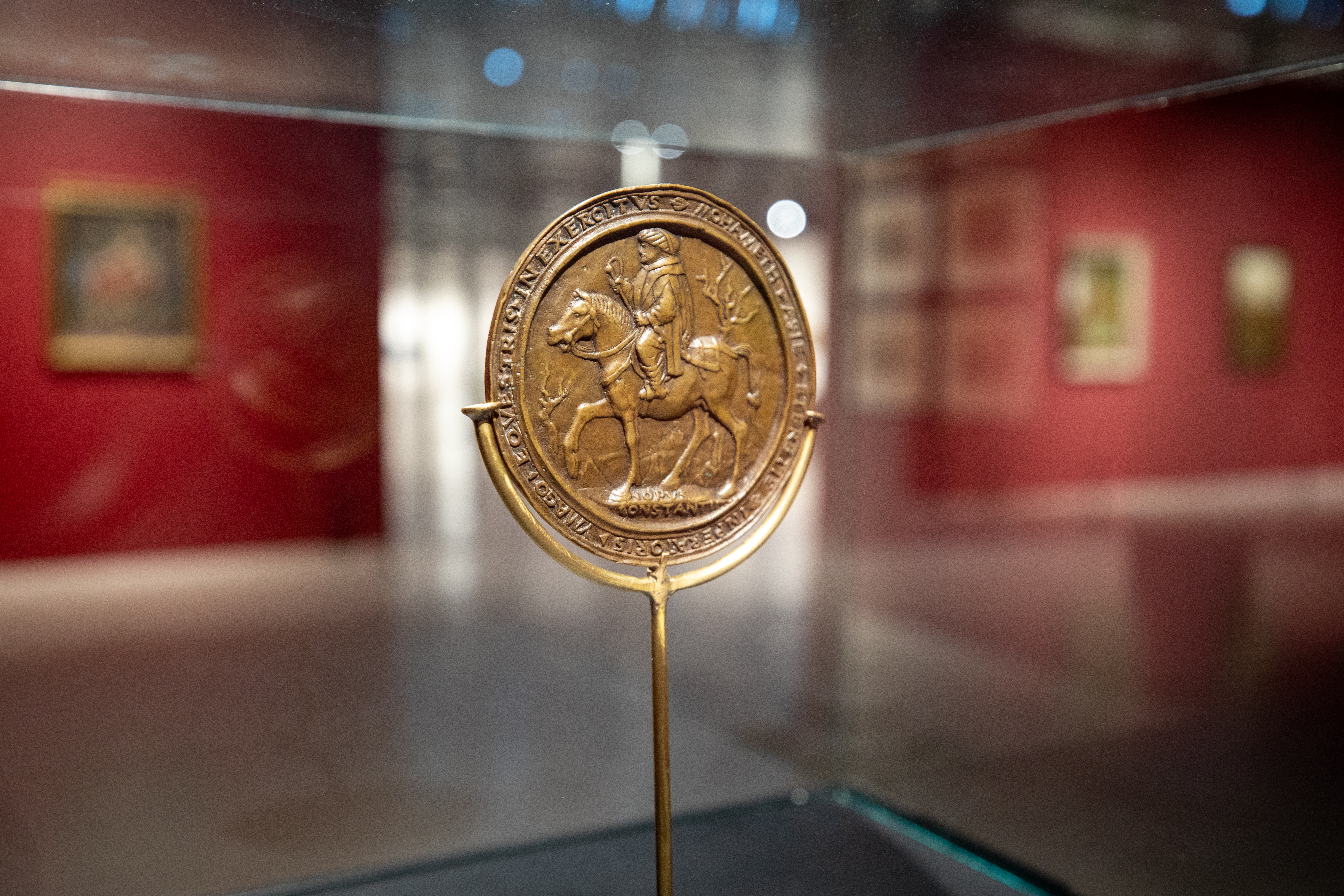
Of course, in the exhibition where İbrahim Çallı’s ‘cult’ portrait of Atatürk, or Feyhaman Duran’s interpretation of Fatih Sultan Mehmed saluting Bellini are also not forgotten, the surprising contents do not end there. Speaking of Bellini, a work that can be called the crown jewel of the exhibition appears before us as the original painting by Gentile Bellini, which holds the very center of the event: Sultan Mehmed II with a Young Dignitary. Or the value of the exhibition multiplies with Costanzo da Ferrara’s Fatih medallion. Likewise, in the exhibition’s ‘palace’ section, Cristofano dell’Altissimo’s interpretation of Kanuni Sultan Süleyman also awaits us.
If the astonishment created by these portraits is not enough, the exhibition also presents to us the self-portrait drawings of the man of letters, journalist, and critic Tevfik Fikret from the Aşiyan Museum collection, which hosts many of the works that follow, or a portrait by Mihri Müşfik interpreting Fikret. For those who say “this is not enough for us,” among Fikret’s incredibly realistic drawings, the artist’s Istanbul tough guy, the wisteria still life, or his interpretation of Charles Darwin, the pioneer of the theory of evolution, can also be added to this list.
As mentioned, in the exhibition’s ‘palace’ section, visitors are also welcomed by a portrait of Recaizade Mahmud Ekrem and Mehmet Emin Yurdakul by Şehzade Abdülmecid Efendi, the intellectual figure of the late Ottoman court.
Among the works in which historicity is particularly emphasized, Zeki Kocamemi’s canvas Ata’s Funeral Ceremony, appearing before us from the Atatürk Museum collection in the exhibition, draws attention both with its vastness and with the light of lament it pours out within its ‘dark’ climate. Likewise, in the exhibition Mehmet Ruhi Arel’s The Entry of the Turkish Army into Istanbul is not forgotten. To this, Sami Yetik’s interpretation Women in the War of Independence should also rightly be added. Again, as with Tevfik Fikret, landscape and portrait paintings signed by Hüseyin Rahmi Gürpınar can also be noted as another surprise in the exhibition.
At the event, Mesrur İzzet’s charming women with umbrellas, his dancing girls, or Mehmet Muazzez Özduygu’s compositions of Karagöz and Kavuklu Hamdi, as well as Amadeo Preziosi’s Orientalist interpretations of the ‘Sinful’ woman or the Turkish Woman and Women Playing the Oud and Smoking Hookah, also enter among the plastic findings that will be duly recorded for the future.
In this regard, the exhibition, which reinforces its historical mission with the City Museum depicting many Ottoman administrators and military figures and with the Tanzimat Museum collection, of course does not overlook its dance with contemporary art.
For example, when looking at the contemporary photography examples in the City Museum’s collection, many black-and-white compositions once again line up, documenting different urban spots as captured by renowned photographers such as Ara Güler, Gültekin Çizgen, İbrahim Zaman, İzzet Keribar, Ozan Sağdıç, Şemsi Güner, Yıldız Moran, and Ersin Alok.
Likewise, many signatures such as Mustafa Irgat, Mithat Şen, Mevlüt Akyıldız, Komet, Muhsin Kut, Melike Abasıyanık Kurtiç, Şirin İskit, and Şenol Yorozlu, who once gave life to 66 Squares, as well as Selma Gürbüz, Yavuz Tanyeli, Yüksel Arslan and İnci Eviner, together with İpek (Aksüğür) Duben, Cihat Burak, Burhan Doğançay, Temür Akagündüz and Ara Güler, and also Nevhiz Tanyeli, Mustafa Pancar, Ömer Uluç, Selda Asal, and Özer Kabaş, almost stage a cultural, historical, and social kind of procession at ArtIstanbul Feshane with their original works measuring 33 x 33 cm.
When you step into another ‘street’ of the exhibition, extraordinary original prints presented to the exhibition from the inventory of the Atatürk Library Museum Unit appear before you. Many artists such as Avni Arbaş, Burhan Doğançay, Gülsün Karamustafa, Mehmet Güleryüz, Mehmet Koyunoğlu, Melike A. Kurtiç, Ferruh Başağa, Nancy Atakan, Tosun Bayrak, Serpil Yeter, and Yunus Güneş are waiting to be discovered here.
If we are to mention other works in the exhibition that also catch the eye, Zehra Aral’s abstract expressionist female portrait Fear, the nuanced interpretations of women in three‑dimensional form by sculptor Emel Vardar (expressed with delicate veracity), and Emre Senan’s striking impression Goat also deserve to be noted here. In addition, the exhibition is more than worthy of being seen from start to finish with “Unable to Leave”, an abstract expressionist graphic masterpiece completed last year by Tan Cemal with acrylic pen, and “Flow”, the metaphysical portrait donated to the show by Tayyar Eren.
Of course, Ali Gün Yıldırım, Mehmet Göktepe, Bedri Rahmi Eyüboğlu, Eren Eyüboğlu, and many other artists can also be mentioned among the other fixtures of this Istanbul rally, for you to discover.