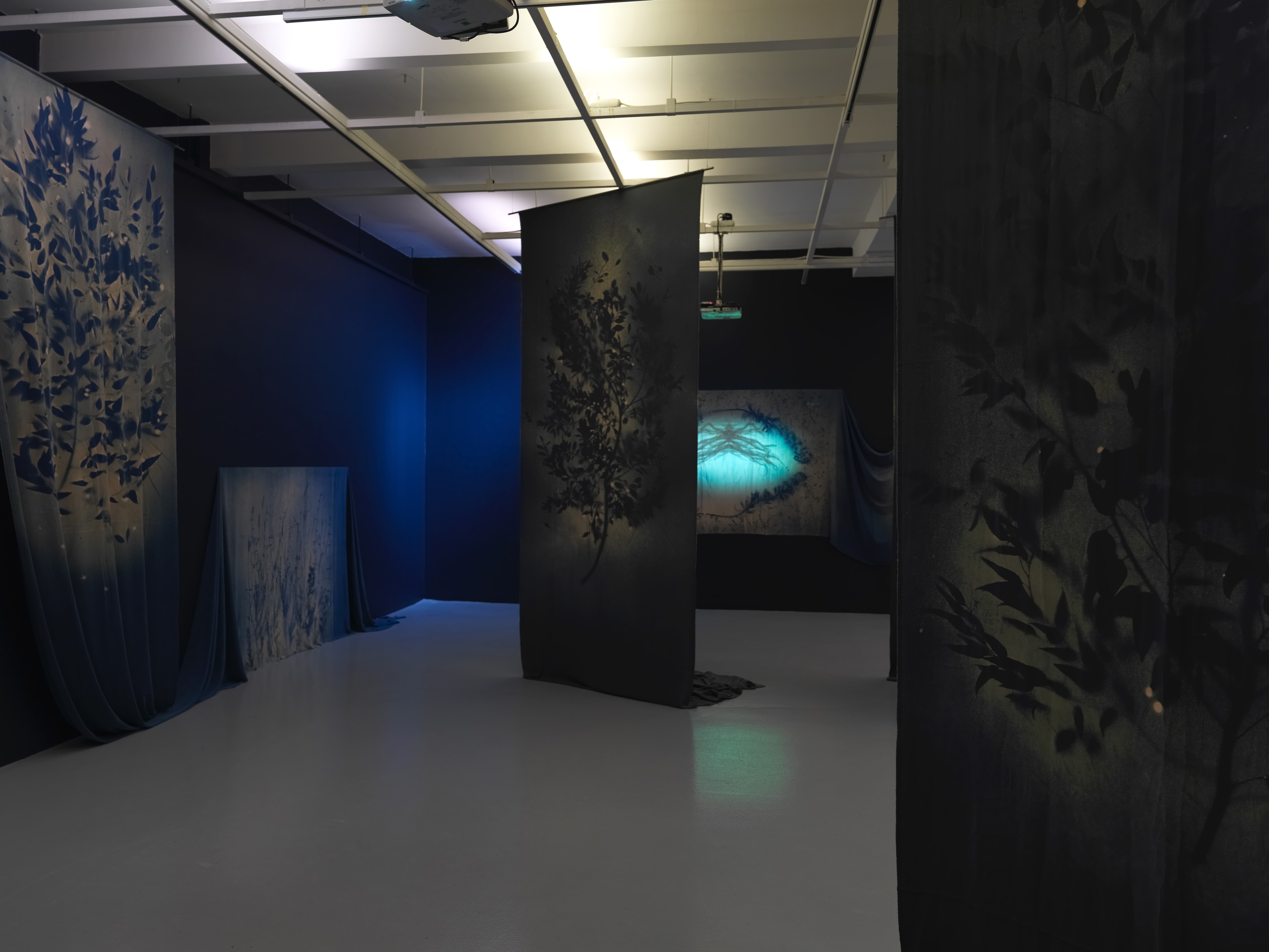
Impressions drawn by Fulya Cetin from Antalya Olympos, where she lives, have transformed into a narrative titled “Growing with the Wind” at Gallery Nev Istanbul. The exhibition, on view until mid-March, will deepen in mid-February with the presentation of her video “Witches of the Forest.” Cetin states, “You know how we all have places where we become fragile, more sensitive; how we all try to appear strong—it has nothing to do with being a woman and/or a man. I say, ‘You don’t always have to be strong; look at it from this perspective as well.’”

“Growing with the Wind”: A Contemporary Folklore / Evrim Altuğ
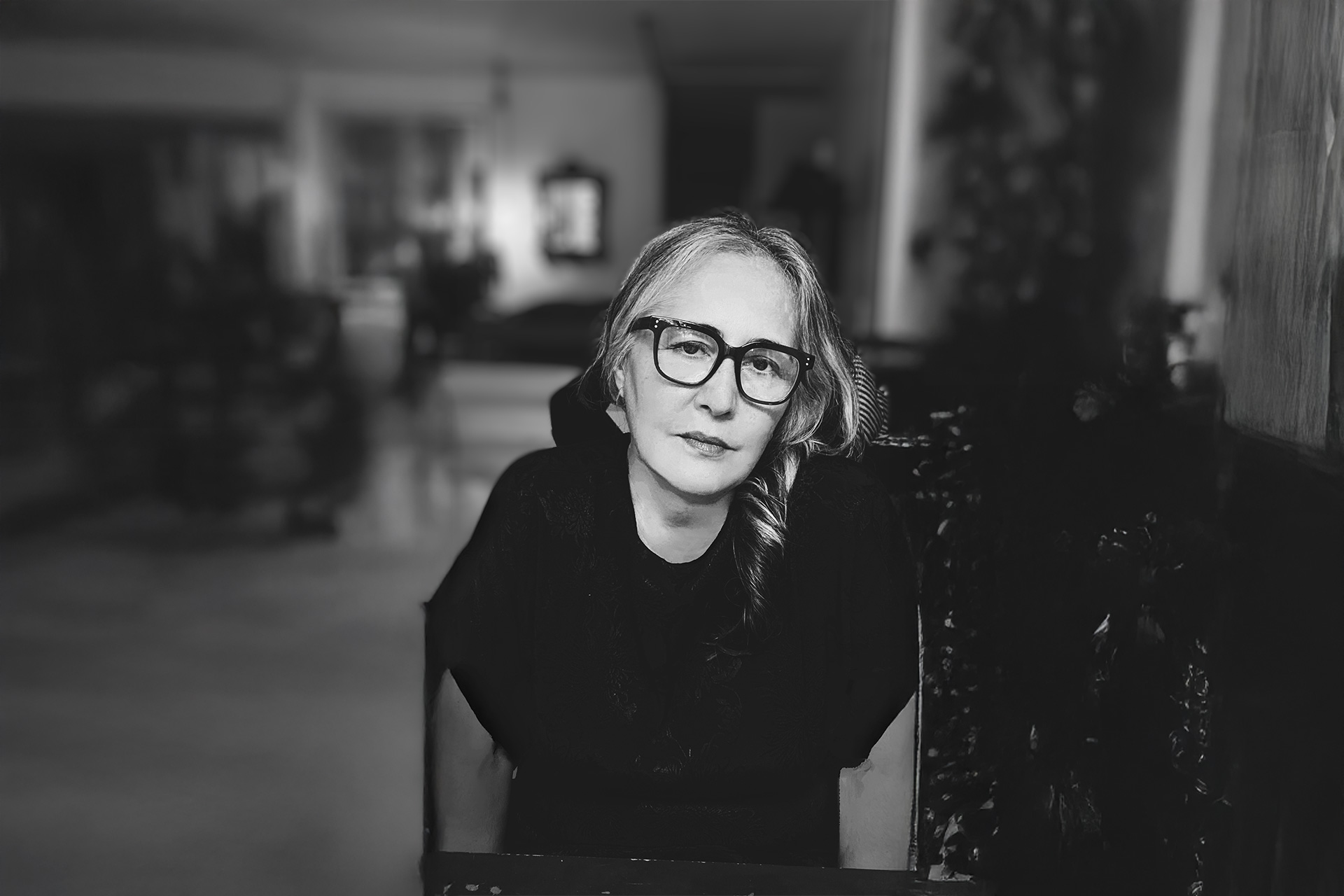
Fulya Cetin’s latest solo exhibition, “Growing with the Wind,” is presented at Gallery Nev Istanbul between 23 January and 14 March. The exhibition stands as a kind of testament, on a human level, to the feminine and universal bond the artist—who has chosen a “voluntary exile” in Antalya’s Olympos—has formed with nature, time, being, and light. As your time within the exhibition deepens, this testament gradually begins to exhale a “contemporary folklore” atmosphere upon you.
In Cetin’s exhibition—whose first phase can be viewed until 21 February at the gallery on the second floor of Misir Apartmani on Istiklal Caddesi—both the light and the sense of restraint and softness in expression greet you like a singular emblem of strength the moment you step inside.
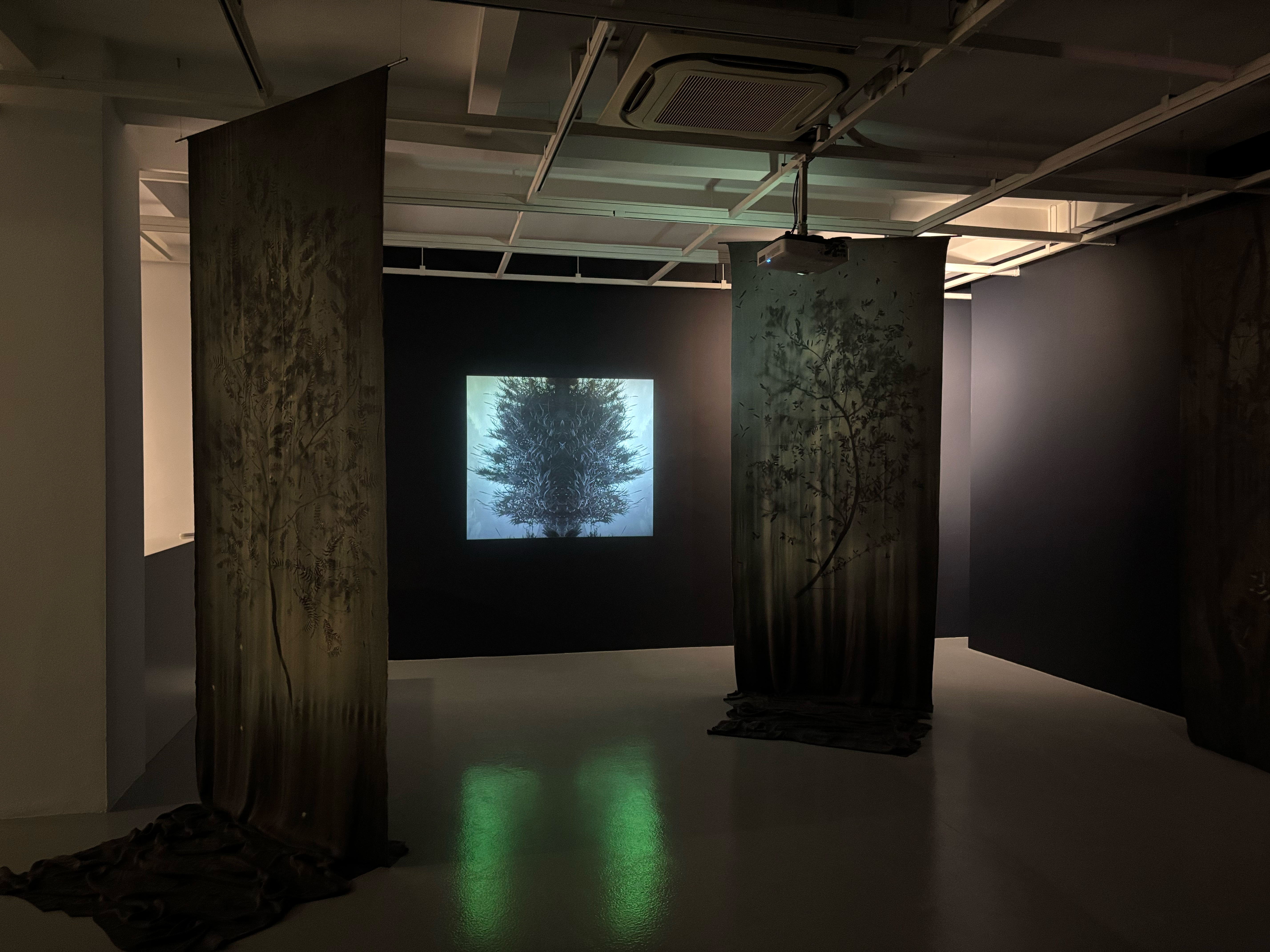
The artist does not stop at this; beginning 21 February, she plans to introduce her new video work, “Witches of the Forest,” to the audience for the first time within the scope of the exhibition.
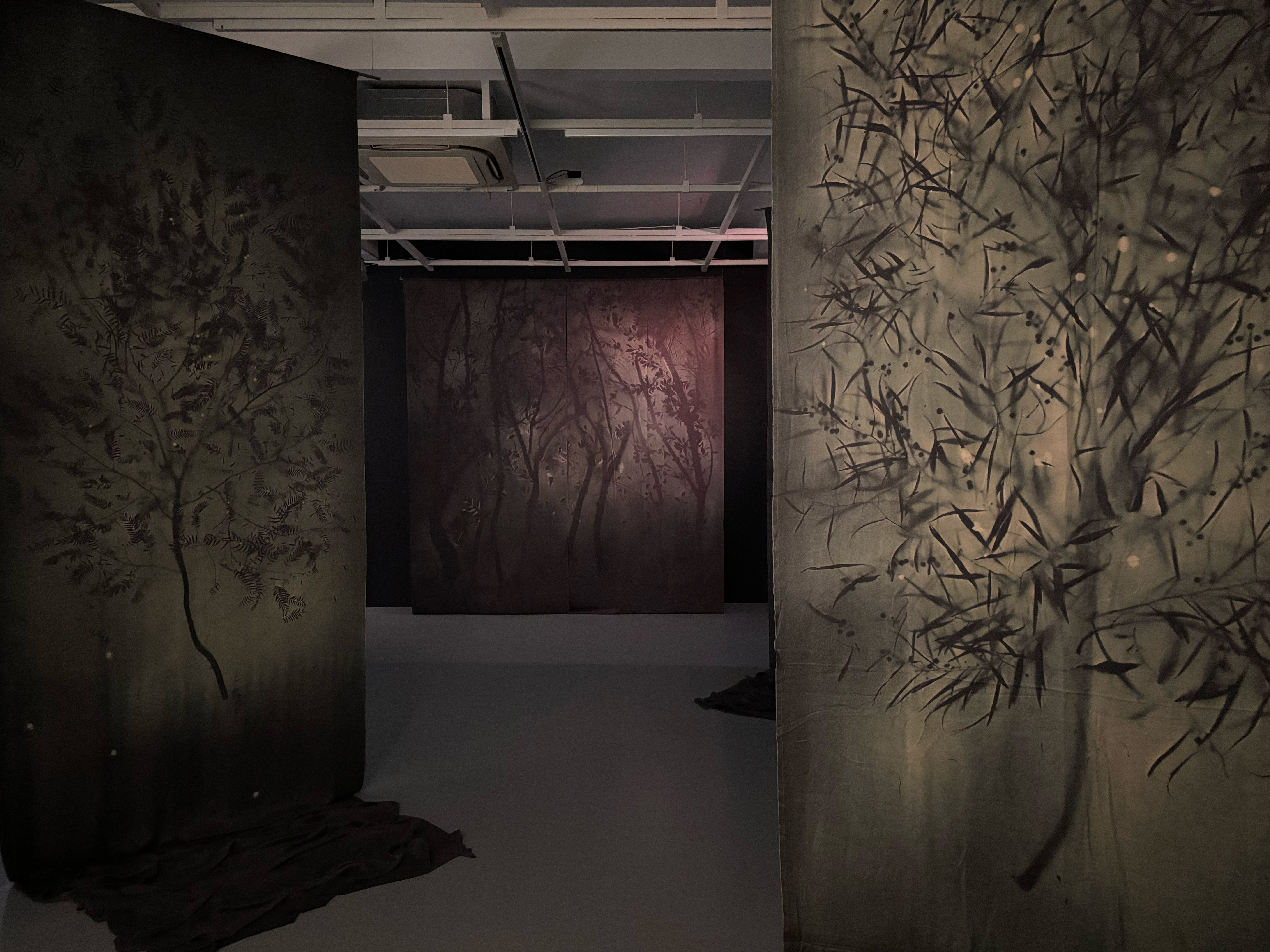
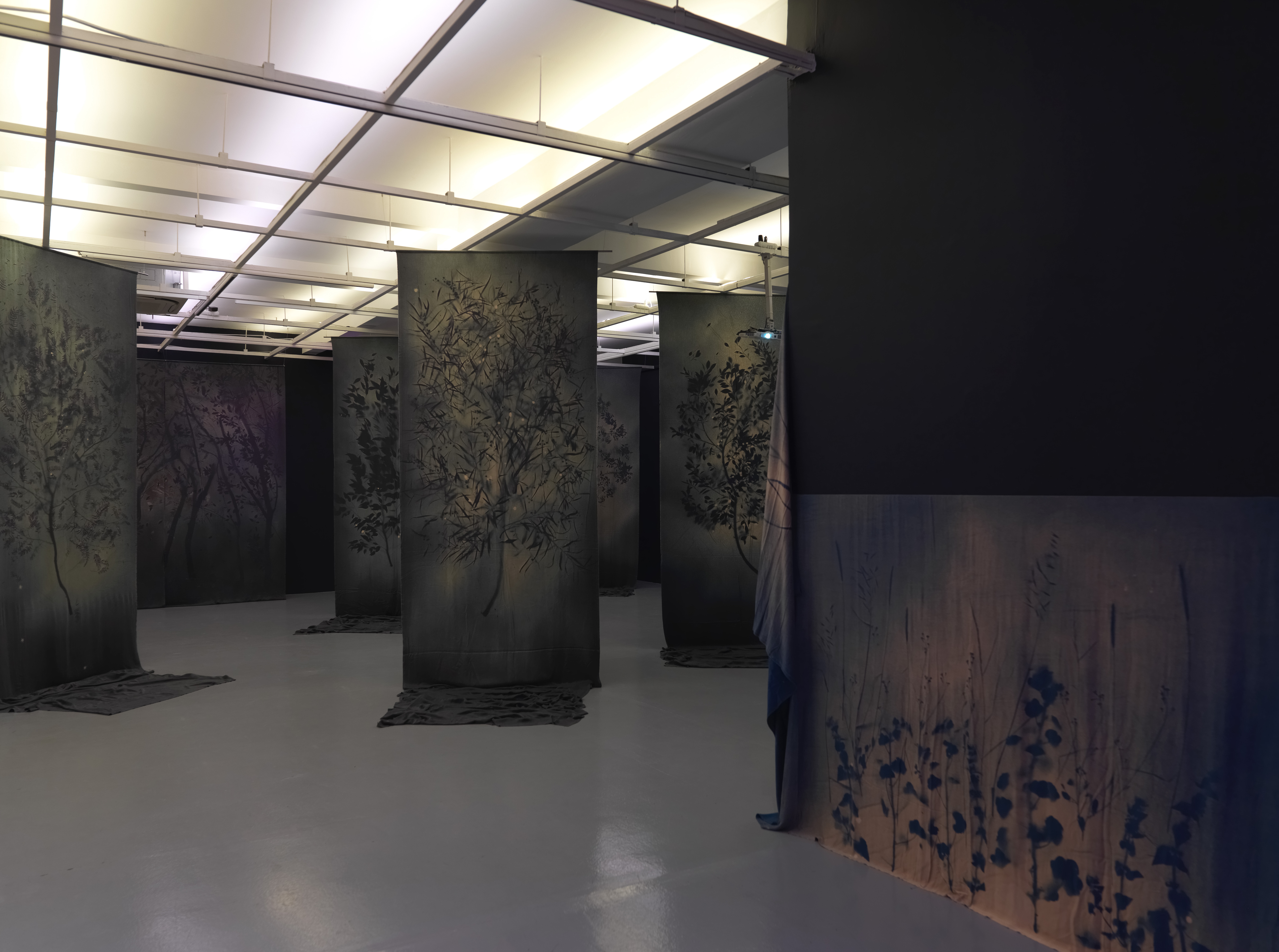
“Growing with the Wind” draws its capital of truth from the trees the artist planted in her garden in Olympos, which gradually cling to one another and are then pruned. The plant forms the exhibition offers to the viewer at dusk—scentless yet rich in texture—take on the form of hybrid self-portraits of “Mother Nature” / “Cetin,” while the intimacy produced by the event becomes the sole imprint of the feminine language present in the exhibition.
While navigating this eco-psychological “Secret Garden” formed by the exhibition, the viewer experiences a subtle restlessness—at times even a dramatic tension—about where to position themselves or which direction to take. As awareness deepens, the degree of familiarity with the identified plant species becomes, for the viewer, an important examination of civilization and ecology.
From one perspective, Cetin instills into the portraits/images of plants such as black pepper, mimosa and hollyhock—carried from Olympos to Istanbul—the living, heartfelt and hope-driven continuity of her gaze as a woman and the solidarity of destiny she shares with them.
The artist, who debates and prompts debate around the political position embedded in an “alive or dead” or “active or passive gaze” toward life through a perfect twilight, does not neglect the responsibility of the existential circle through which she views art and her own life, also referring in this context to her 2023 exhibition “Death Never Was” held at Den Art.
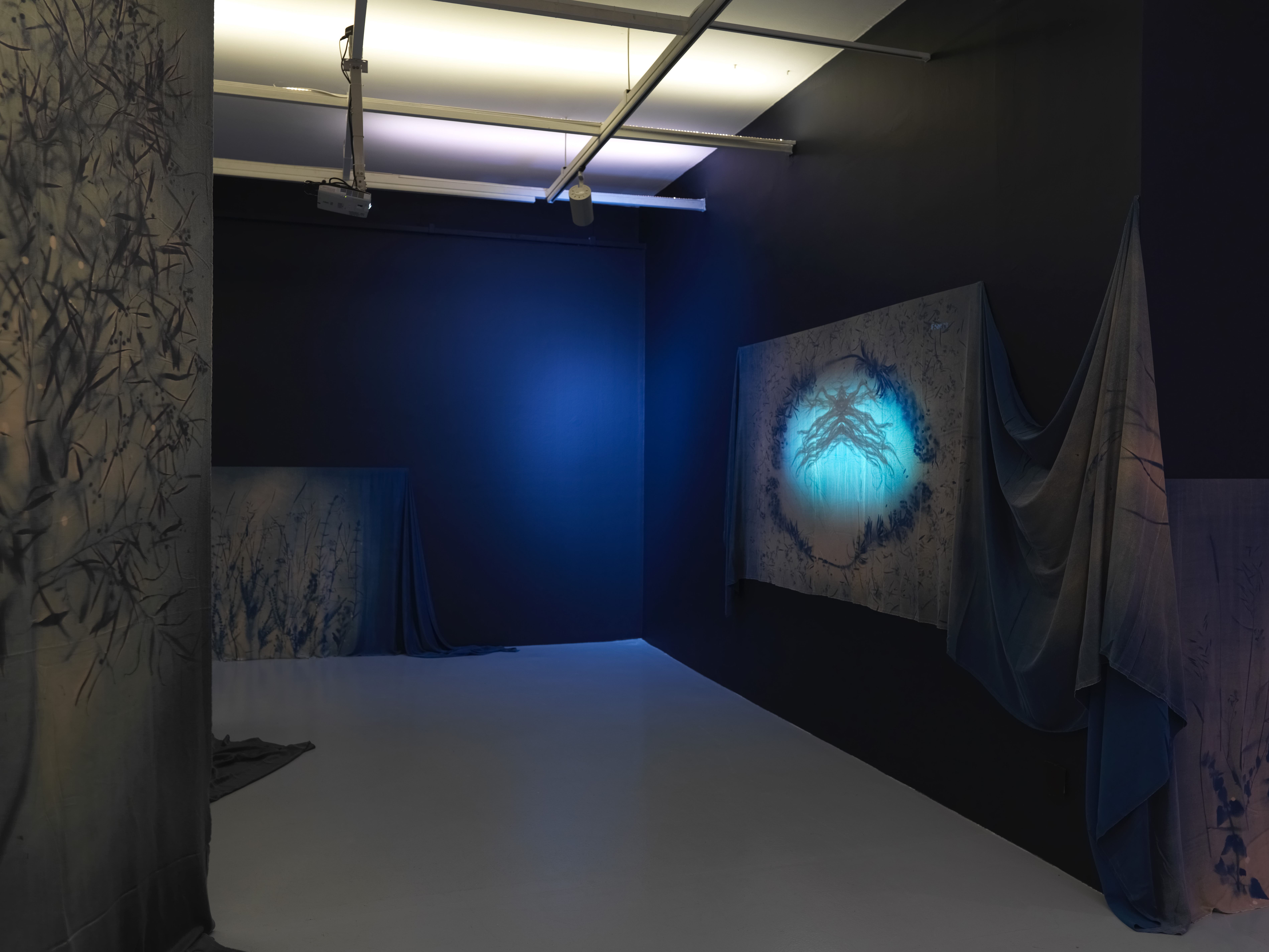
Through her exhibition, the artist whispers to us about how vivid this “vegetal life,” which she has consciously embraced, truly is; in the pruning process, she records and choreographs the transparent—even erotic—traces of existence of these feminine plant masses, utilizing vegan silk fabrics acquired from Bursa.
According to the information provided by the gallery, while Cetin follows a production process that transfers the plants she collects from nature onto the surface, these fabrics—obtained through an alternative method to traditional silkworm cultivation—appear in the exhibition as an ethical and sustainable extension of the relationship established with nature.
Furthermore, the semi-transparent and sensorial quality of the silk conveys the wind’s invisible movement to the surface, recalling the sway of branches and the presence of a growing internal forest. In this context, the branches bear the memory of coexistence rather than the gesture of a solitary tree, and the viewer is faced not with a scene to behold, but with a space to pass through.
To achieve this restrained display, the artist has entered into close and dedicated collaboration with numerous contributors. The project has received support—led by Ihsan Ipeker and Hande Altindag on behalf of Ipeker Tekstil—from Hesen Chalak, Ismail Ifsa, Efkan Ozturk, Sine Ergun, Sezgi Ozenturk, Cagla Acar, Nezihe Dikilitas, Ibrahim Karci, Eda Emirdag, Orcun Ozkilinc, Tolga Burcak, Berk Gumusterazili and Ilbey Kaya.
According to the gallery’s official statement, “…in the exhibition’s second (video / Witches of the Forest) chapter, the female body and the trunk of a tree, wind-swept hair and the flying leaves of trees, create a zone of contact between internal and external forests.”
Filmed at Eksidere Dag Ilicasi and produced by maumau, the video centers on the intense and mysterious atmosphere created by bodies that move with the wind yet continue to remain in place. Through their presence, these bodies evoke a feminine stance that protects both space and its own territory, remains in exchange with the wind, and insists on standing firm, recalling polyphony and solidarity.
Under these circumstances, what remains for us is the responsibility of conducting a “Cetin” (the artists surname translates to “tough” in English) conversation with the esteemed Fulya; hiding behind one of the trees, we whisper the dialogue below with her.
Let us focus in particular on the question of fragility. An extremely ironic, melodramatic dramaturgy concerning both the fragility of nature and that of women seems to dominate the exhibition. Yes, intimacy is at its peak, yet there is also a necessity for exposure. Shall we begin by speaking about how you navigate this balance—or tension?
Fulya CETIN: These works actually emerged during a period when I escaped the city, from Istanbul, and hid in Olympos—hid behind the trees. I first made them on paper. While spending time in the studio, I try to lighten the situation I was experiencing by saying I was “playing a game,” in a way. Because I did not want to burden the work too heavily and restrict my freedom within it. While experimenting on paper in the studio, these vegan Bursa silks arrived. I tried them on top of it.
Why did I create them? Why are these trees standing here individually? Because when I was here, walking within the forest among the trees, it felt deeply good to me, and I wanted to bring that with me. I usually want to evoke what I feel instead of explaining it. Also, I am not entirely sure of anything.
There is certainly an element of “escape and hiding.” In this process, it was as though I was extracting the traces of the places where I had taken refuge. I watched the birds in the exhibition; I saw that hair across the trees. In my own walks through the forest, the flying of my hair was also part of it.
The fact that I cannot control everything—the way hair flies, the way tree branches move, that those controls belong to the wind; while I can move every part of my body down to my eyelashes, yet cannot move the tip of my hair— I associated all of this with freedoms, with birds and with trees. In fact, I approached it from a request that might be good for all of us, from a more modest and equal point of view: “How beautiful it would be if we looked at the world this way as well,” I said. When I call it a request, it could also be described as a reproach, whatever one wishes to name it.
The exhibition creates the impression of a dream experienced while awake. The twilight within it balances between sunset and daybreak. This produces an important sense of insecurity in us, urging reflection on how near—or how distant—we are from the nature beyond us, alongside our own inner nature. It is a work that functions through empathy. How do you see it?
You expressed it beautifully; in fact, this is something I have always wanted and thought about. I ask for this empathy. We all have places where we become fragile, more sensitive; we all try to appear strong, and this has nothing to do with being a woman or a man. I am saying, “You do not always have to be strong, come and look from here as well.”
It is a state of delicacy, but also elegance and lightness, existing somewhere between dream and reality, between the real and the unreal. I do not feel as though I stand in a position that views the world with both feet planted in a materialist stance. If one foot is in this world, the other seems to be somewhere else; that is how I live and feel.
For example, during my walks, I know where these trees stand. They feel like acquaintances to me. I know the shapes they take in every season, the beings that live on them. So we are very familiar with one another. I want to call others toward this familiarity—to a more primal place, farther from civilization, and away from the modern, contemporary life lived in the city.
Yes, it is dreamlike, but not solely a dream. There is a tangible reality in it. I really saw and experienced those birds’ wings, that hair, the strands caught in the trees. When transported into the city, it takes on the appearance of a dream. But such a life does exist.
Have you ever considered staging this work in the forest itself?
As I walked in the forest, I was already seeing these things. In fact, I wanted to bring what I saw there and show it here. It did not occur to me to stage it; while living within it, it was already so surprising and magnificent that it did not need anything added by me. Simply watching what was happening there, I was already deeply moved by what I saw. It felt as though my contribution was not really necessary.
As humans—women, men, observers—the piece makes us reflect on the question: “How much farther can I retreat from this point?”
Technically, it is the same. It is about the coincidences, about how much the fabric or the paint gives itself over to me. For example, if you make it in the heat, it dries in another time span and yields a different result. In winter, when I work in a more humid setting, it becomes something else entirely. Everything takes place within a process beyond my control. I was very preoccupied with this: I wanted to present not only the final outcome, but the journey, the lived experience of making it. Instead of flawless results, I wanted to carry here what we did together with this Benjamin tree, with this Hackberry.
Strangely, “Growing with the Wind” is a very confiding work. So much so that, as one moves through it, one begins to feel a sense of embarrassment.
Hearing this is very precious to me; you have felt it beautifully.
We say “Mother Nature,” yet there is an extraordinary outburst of grace—so overwhelming that one feels humbled within it. Within this fragility, there is also a power of softness, a sense of action. What is your interpretation?
In the feminist struggle we carry forward, I make an effort to remain grounded in my own being, to avoid adopting a masculine tone or growing rigid. I try to maintain this without making myself angular, and I request this from the world for every form of life. If a sensitivity is formed here, it is not formed solely for oneself. It is about extending that same sensitivity to every living presence you encounter.
From a technical perspective, the work involves many instruments: drawing, video, installation, choreography, abstraction, textile art… Yet to produce something so “spectral” while containing all of this is, in itself, quite intriguing, is it not?
As I said, this state of “playing a game” reduces the weight of the situation while creating a space that frees me as well. I enjoy getting to know materials. I like playing with them. When I spend time in my studio, I like approaching a material without knowing what will happen. What you see here are vegan silks. They were sent to me, and I made experiments. With their lightness and softness, I sought—and still seek—the counterparts of things I had long been observing in the studio.
The work carries an unusual feeling of impermanence; it is neither gloomy nor melancholic, yet it makes one reflect on its own destiny: What will become of it? Will it fall apart over time, or could it be acquired by a museum collection? What do you anticipate?
Fortunately, I do not think about these things while making the work, yet I understand you very well. This is something that will unfold beyond me. Of course, it could be exhibited in a museum in this way, even 24/7. I am building a dream and inviting people into it. When I walked in the forest, what did I leave behind? Rather than pointing to the thoughts I left behind, I point toward what I looked at while walking in the forest. For that reason, the work does not feel unhappy or hopeless; it feels like a dream that is always looking ahead.
The film of the project, “Witches of the Forest” (which will be screened again in the exhibition space at Gallery Nev starting 21 February), carries this same ambivalence: it is neither complete happiness nor unhappiness, but holds a slightly unsettling aspect. This has been a dream of mine for a very long time. The walks I took beforehand for this work were very important to me. There are real images here—we went with women and filmed. There will again be trees, hair, and movements in the wind.
Another inviting aspect of the exhibition lies in its silence. What would you think about introducing a performance or an acoustic musical intervention?
I have struggled with this decision repeatedly. For example, I considered at length whether to incorporate the sound of pigeon wings into the exhibition. The vanishing of that wing, brushing past the edge of your hearing… At a certain point, I realized that rather than transferring everything I witnessed, it could also mean withholding some elements deliberately, and I stepped back from certain ideas. In that sense, what you encounter here is like a filter. In the studio, I actually have numerous sound recordings—my footsteps, birds, even the distinct sounds made by different trees—but I decided not to integrate them into the exhibition.
One phrase the exhibition brings to mind—accompanied perhaps by the ghost of Virginia Woolf—is that “Every woman is a Secret Garden.”
In fact, my subject is also related to a kind of primal state and flexibility. I do not want “woman” to automatically evoke ideas of delicacy and patience. Women are already exhausted by such associations. When I look at today’s problems, I see a language of violence. I see a masculine way of life here, and I say that this world, too, has grown very tired of it.
A pair of pigeons in the exhibition…
That is somewhat related to Hrant Dink; he described very well what it means to live with the unease of a pigeon, and that was something I also felt.
For information: https://www.galerinevistanbul.com/tr/exhibitions/322-growing-with-the-wind/press_release_text/