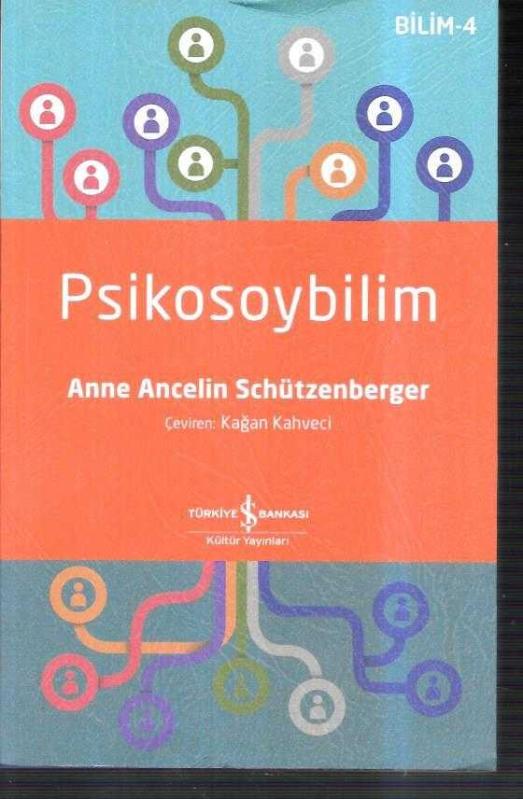
‘Psychogenealogy – Healing Family Wounds and Finding Oneself’ (Psychogenealogie – Guerir les blessures familiales et se retrouver soi), written by the French psychologist Anne Ancelin Schützenberger, explains the effects of family history on individuals’ psychology and life events.
Our life cycles, and the traumas we believe to be without cause, may actually be a legacy inherited from our ancestors…
Experiencing similar illnesses at the same age as some people in our family tree, marrying at the same age, divorcing at the same age, the same accidents, the same professions, sudden losses, feelings of guilt, and traumas may perhaps not be coincidences, but rather an ancestral legacy…
Schützenberger defines this situation as “intergenerational transmission” and underlines the concept of “invisible loyalty.” What is this “invisible loyalty”? Individuals, without being aware of it, remain loyal to their family, perhaps representing a relative they have never met and whose name they do not even know. And from generation to generation, they live and pass on the same story.
The main sentence of the book: A person is not only the heir of their own life, but also of their family’s past.
The “Genosociogram” method described in the book maps our lineage across 7 to 9 generations and makes recurring patterns within the family visible. In this way, it maps all significant events that come to mind—such as death, illness, marriage, divorce, migration, bankruptcy, resignation, slander, family secrets, in other words “what is left unspoken,” and unresolved grief—and gives meaning to complex family relationships.
Now I’m trying to find out who in my family experienced something related to noise or loud sounds, and whose trauma has been passed on to me!