Remembered for his seven-color public installation posing the question Where Do We Go From Here? at the 6th Istanbul Biennial, themed Passion and the Wave, Ugo Rondinone returns to Istanbul with his first gallery exhibition in the city in 27 years, on view at Dirimart Dolapdere. Accompanied by a special gathering centered on his vibrant exhibition that brings mountains and seas together, the artist’s understated works, through which he seeks and finds the sincerity of simplicity, convey both the candor and the hope that the first images of the future are hidden within our own perspective. These “contemporary remnants,” shaped by colors, forms, and memories, also open the door to an examination of belonging and authenticity in relation to oneself, others, and the world, as well as of ownership and mutual freedom. In this way, universal experience affirms its value as the exhibition’s most significant collective presence.

A Colorful, Simple, and Genuine Conversation Between the Seas and the Mountains / Evrim Altuğ
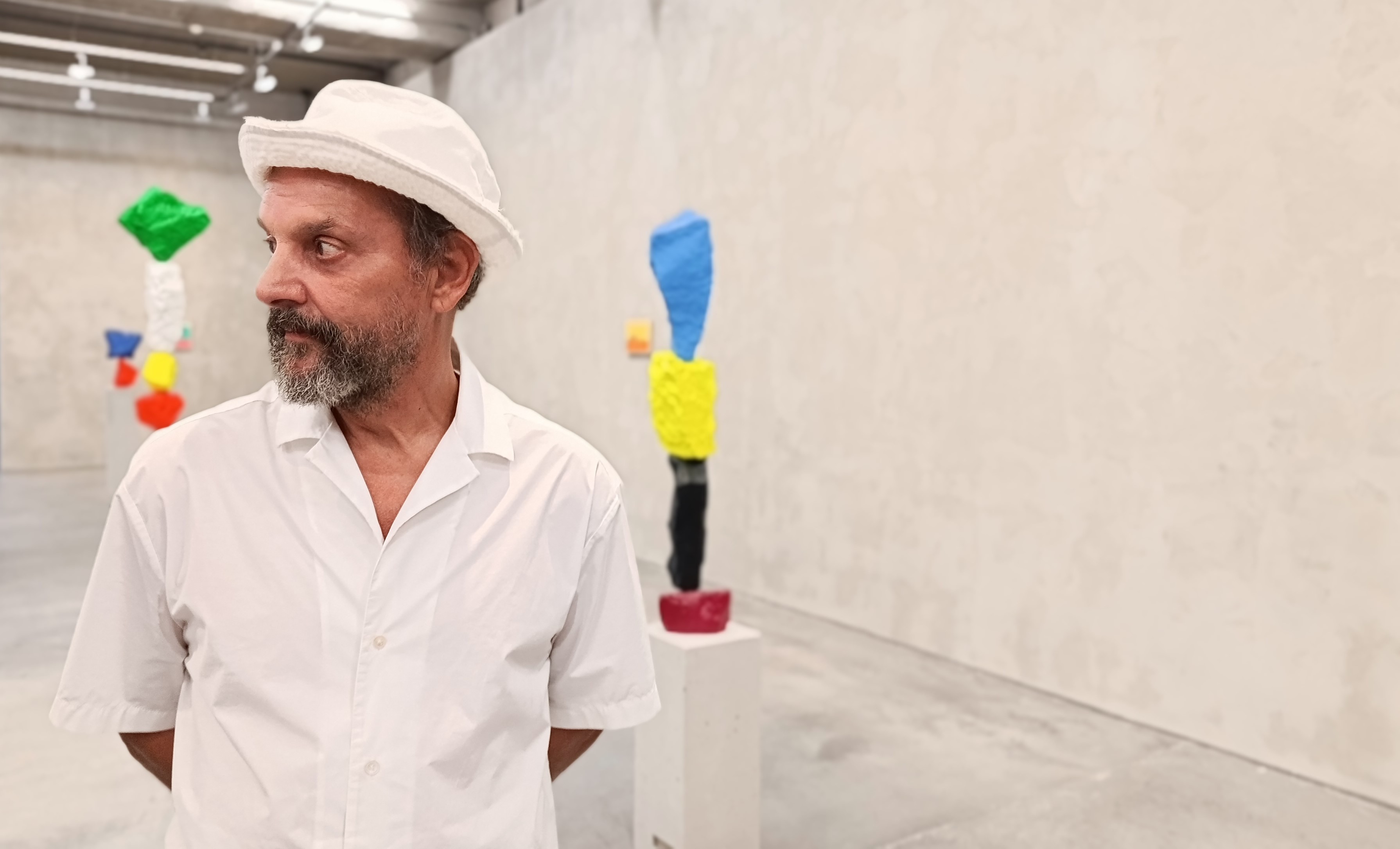
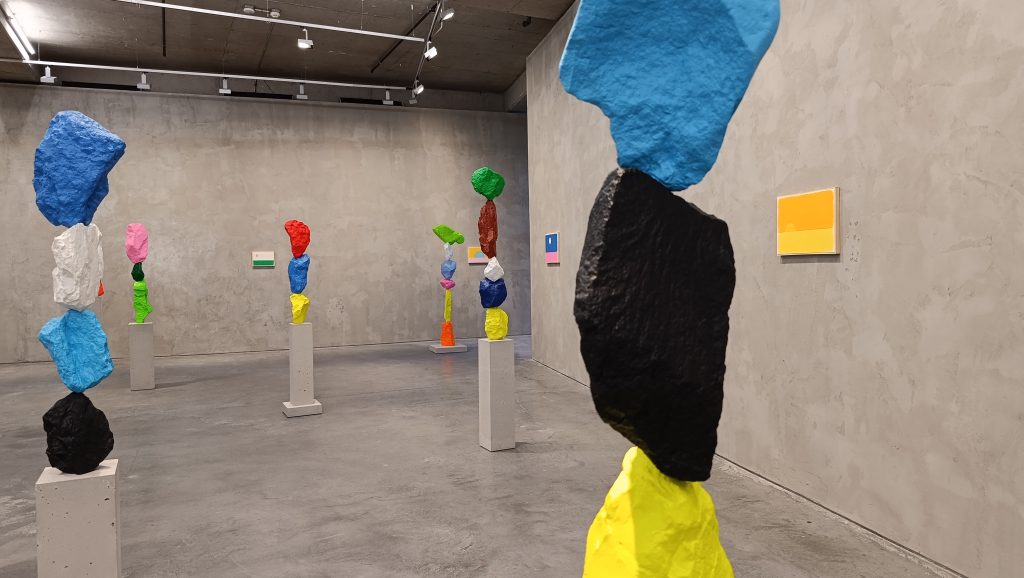
Dirimart, located in Istanbul’s Dolapdere district, opened the season with contemporary artist Ugo Rondinone’s first solo gallery exhibition in Türkiye. Titled The Mountain and The Sea (announced in the press release as The Sun and The Mountain), the exhibition brings together more than thirty of the artist’s paintings and sculptures.
Rondinone’s works are the result of a meticulous practice that brings fragility and resilience, hope and melancholy, the extraordinary and the ordinary together in a single moment, with a care that almost makes one think of them as “serious toys.”
Known to Istanbul audiences through his rainbow-shaped sculpture Where Do We Go From Here?, presented at the 6th Istanbul Biennial in 1999 under the theme Passion and the Wave, curated by Paolo Colombo, Rondinone employs color much as he does form: as a universal vehicle for communication and experience.
The artist, who remarks that he finds the transformation Istanbul has undergone in the 27 years since his last visit remarkable, highlights the sense of unity created by his striking works emerging against concrete walls and floors. During the exhibition preview, he also shares personal reflections on his art and life.
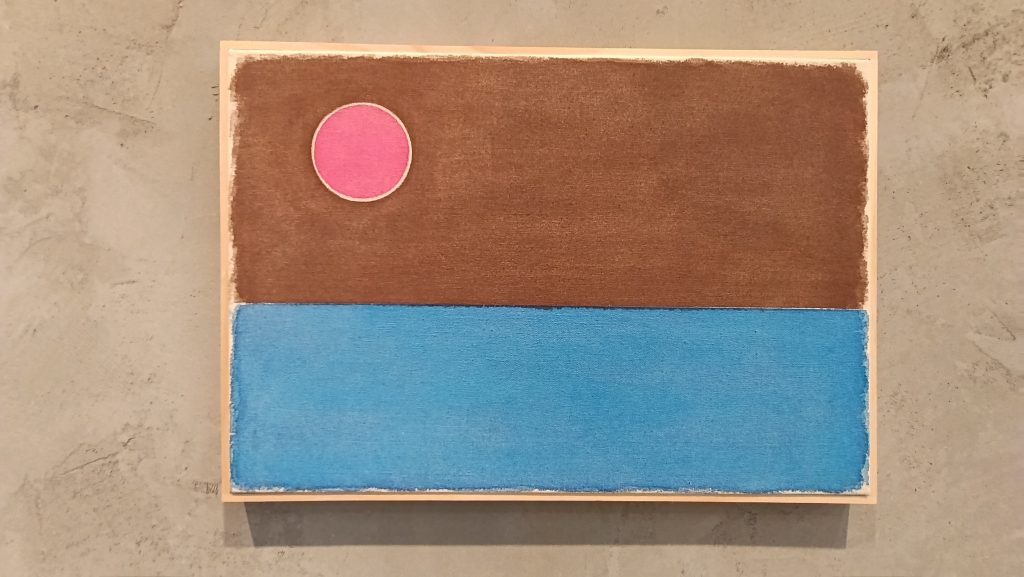
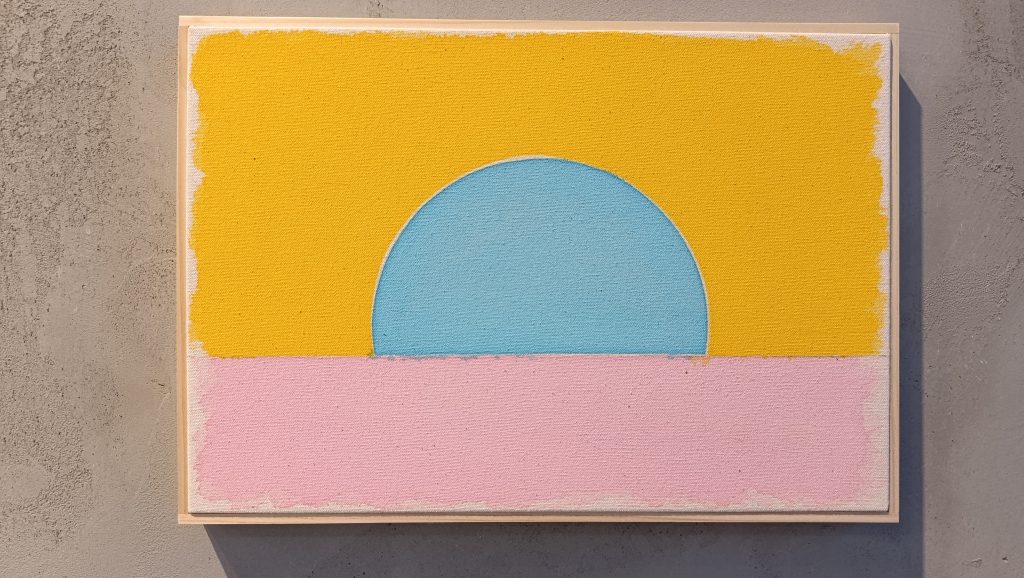
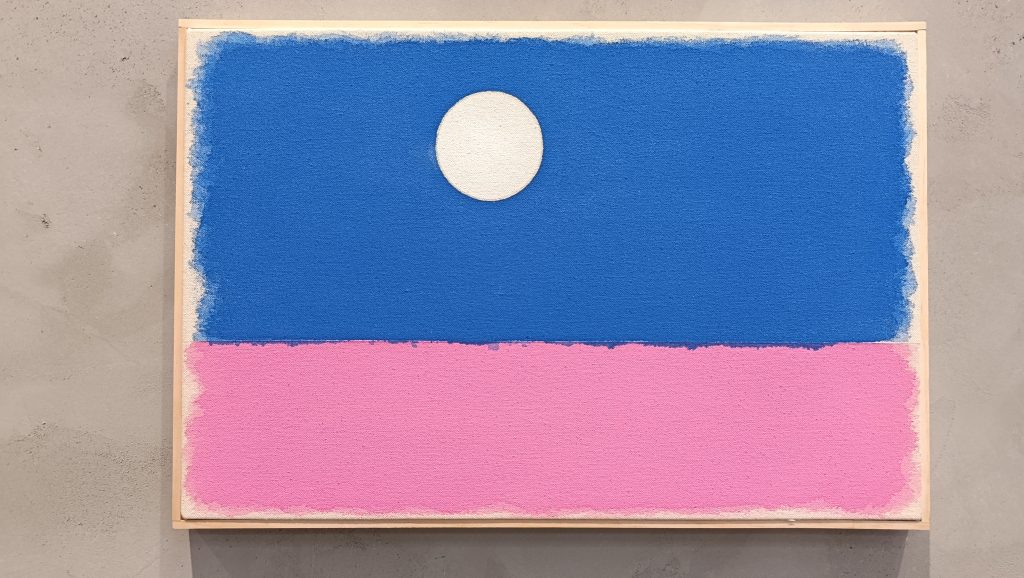
Rondinone states that the seemingly opposing forces of the mountain and the sea bring coherence to his body of work, emphasizing that simplicity is a fundamental element of these pieces. He explains that the landscapes on view have their origins in the lake scenes he created earlier, which were later followed by his sunrise compositions. According to Rondinone, these works were produced while he was staying on Long Island during the Covid-19 pandemic.
Ugo Rondinone explains that his paintings are created in watercolor on raw canvas, a choice he makes deliberately and leaves visible as an integral part of the work. He notes that his compositions are dominated by variations of two recurring elements: the horizon line and the circular form that he describes as the sun.
Drawing attention to the fact that his pencil drawings are presented in their state of becoming, Rondinone insists that achieving and preserving this simplicity has always been his constant goal.
Rondinone notes that both his interpretations of the mountain and his landscape paintings are rooted in his personal experiences and history. At the same time, however, he says that he is careful to ensure that his works remain accessible and relatable to everyone.
“Regardless of culture or background, people everywhere share the same experience when looking at the sun, the dawn, a sunset, or mountains. I began creating my mountain forms in 2016 and continued to develop them over time. They originated from a much larger sculpture I placed in the desert at the request and with the support of the Nevada Museum. That was the starting point that led me here. My inspiration came from the Hoodoo Mountains. Here, you can see the verticality of the mountains in harmony with the horizontality of the seascapes. In a sense, there is not much to be said from an intellectual perspective. This is a visual exhibition. Just feel it and look.”
I ask Rondinone where the sense of stillness and the potential for wonder in his works come from, as they seem to contain a profound capacity for oneness and togetherness. He explains:
“Since my first exhibition in 1991, every gallery I’ve worked with has had large windows. In that first exhibition, I covered the windows with wooden panels, cutting off any connection to the outside reality. Here, instead, I used a brown filter. In doing so, I slowed down time. As a result, visitors gradually forgot about the world outside. The space developed a world of its own. It became isolated. That isolation slowed down the entire atmosphere. Whenever I create an exhibition, I either block out the outside or transform it. In this way, I point to a highly constructed reality.”
Although the artist’s works may appear simple at first glance, the process through which they arrive at that simplicity seems to conceal a considerable degree of chaos. When I ask Rondinone about the relationship between chaos and order in his work, he reflects on it as follows:
“If you take a stone in your hand, you’ll see that it is extraordinarily complex. Every detail of it is. Yet in the end, it is simply a stone. It has been that way since the beginning of humanity, and it will remain that way. So my effort is connected to looking. Looking outward or inward, whether in the context of inspiration or deep observation, it is all about looking. But no matter how closely or deeply you look, what you see is still a stone. The simplest transformation here is the addition of color to it.”
Ugo Rondinone’s works bring together mountains and seas with an energy akin to that of a cluster of matches and matchboxes gathered in a single place. They ignite a connection between subject and object, between the artwork and the viewer. The artist echoes this observation with the following words:
“Through the windows here, a distinction between inside and outside is established. In a way, the two coexist, both in their simplicity and in a chaotic manner.”
The artist’s pursuit of a fundamental balance between horizontal and vertical elements in his work also catches the attention of one of the guests. Rondinone elaborates:
“The work presents a duality. In this exhibition, the geometric and the organic come together side by side. Along with the use of primary colors and watercolor, this also informs me about where to go next. Everything here is entirely colorful today. Perhaps my next body of work will be based on black and white. It is this dynamic that moves me forward. My works guide me on their own. As I create them, I become aware of the other direction as well. I do not assign any particular meaning or value myself. In this way, the work remains open.”
“The landscapes in my first exhibition in 1991 were works that paid tribute to the past. A year later, my black-and-white landscape drawings took the opposite approach, placing dense circular forms, representing the sun or suns, at their center. In this sense, I would say that my subjects generally derive from the German Romantic tradition. Mountains, sunsets… In that regard, Caspar David Friedrich is an important point of departure for me. I began painting landscapes in 1989. When I first exhibited them in 1991, this connection had not yet become apparent, so it was not really discussed. That, in turn, led me to look more closely at Romanticism. Within this tradition, days, nights, and the unknown came to the forefront and helped explain the foundations of my work. Of course, some of my works produce melancholic effects, while others generate entirely opposite, thoroughly joyful responses. As is the case in this exhibition.”
When I ask Rondinone about his observations of how children and adults connect with his exhibitions, he responds:
“The works are already reduced to their essential qualities. Whenever I begin a piece, I focus on how to make it in the simplest way possible. In doing so, I know I am arriving at a universal language that anyone can understand. They do not possess a biographical dimension. Even so, every painting I make contains a reference to the date on which it was created. In that way, each work attaches itself to the others, and together they become a kind of diary. This also allows me to play with both time and space.”
“You may remember that two of my works were featured in the 6th Istanbul Biennial. One was exhibited at Hagia Irene, and the other was in Taksim Square, right next to the metro entrance. The rainbow-themed piece, titled ‘Where Do We Go from Here?’, created a situation in which countless people encountered it as they passed by.”
“As you know, the rainbow evokes Romantic associations. At the same time, it also alludes to the gay community, the AIDS crisis, and the issues and perspectives associated with it. Today, I do not know how these matters are viewed in Istanbul within a political context. But let me emphasize one thing: my work is a work of art; it is not political. It exists, above all, through its archaic quality and simplicity. Through the sense of reverie it evokes, it remains accessible to everyone. Mountains and sunsets are archetypes. It is through such archetypes that humanity connects and comes together. In that sense, I never react to political circumstances, because politics can change in a single day. These works, however, must remain open indefinitely.”
It could be said that the landscape paintings evolve through an element of chance. The mountains, by contrast, are composed using nine fundamental colors. Within these minimal parameters, each work takes shape. The paintings may be seen as highly emotional. Do the stones come together? If they do, then the work is complete. In a way, two stones are preferable to six for the sake of simplicity.
Reflecting on these observations, Rondinone’s exhibition carries the hope that the future lies concealed within the first images hidden in our own gaze. The more honestly, simply, and directly we look within ourselves, toward others, and toward the world around us, the more the exhibition sends visual and spiritual signals that all manner of miracles of time and space may spring forth from there. Produced through colors, forms, and memories, these “contemporary remnants” also open the door to questions of belonging and authenticity in one’s relationship with oneself, with others, and with the world, while at the same time inviting reflection on ownership and mutual freedom. In this way, universal experience asserts its value as the exhibition’s most significant collective presence.