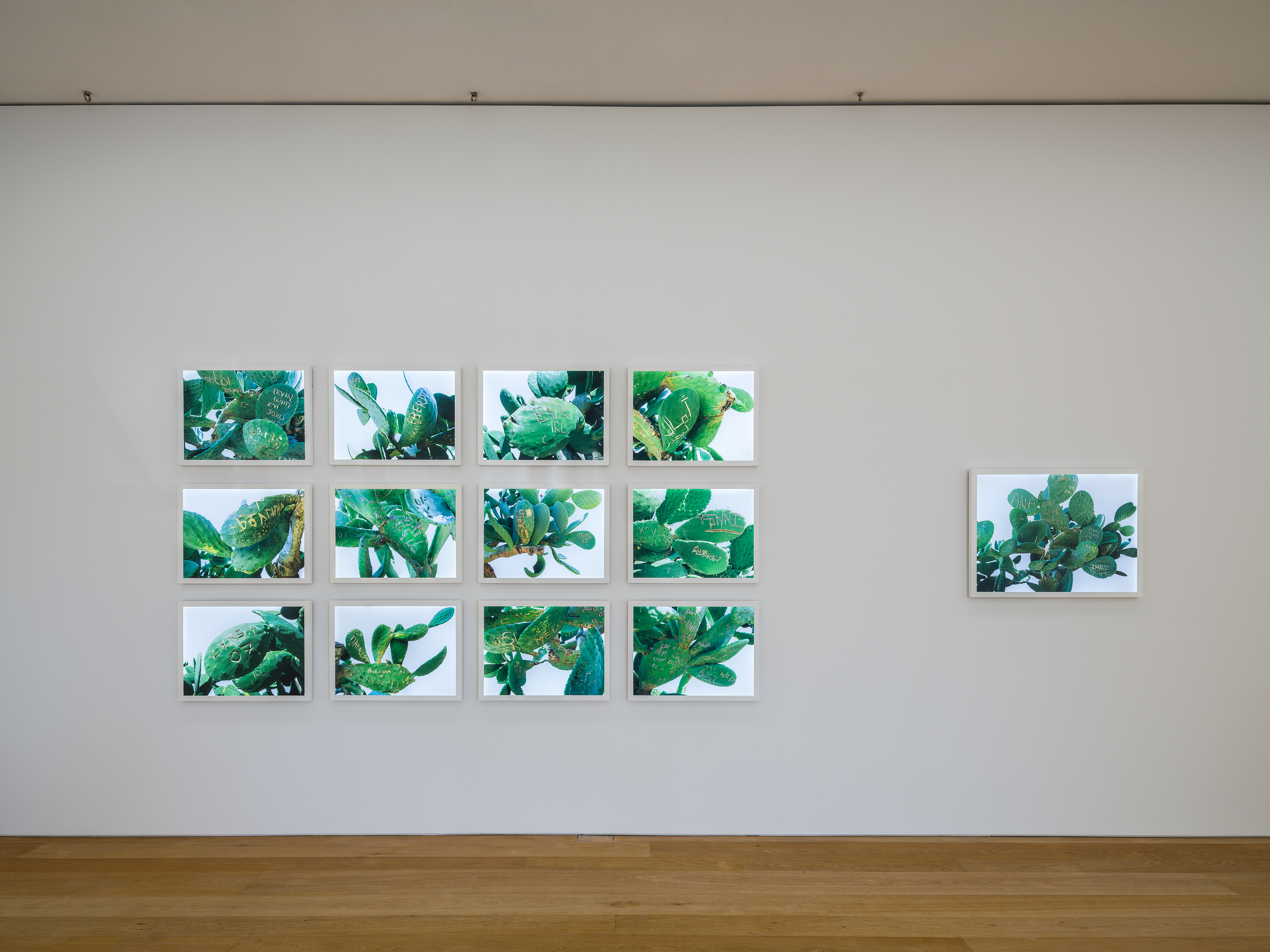
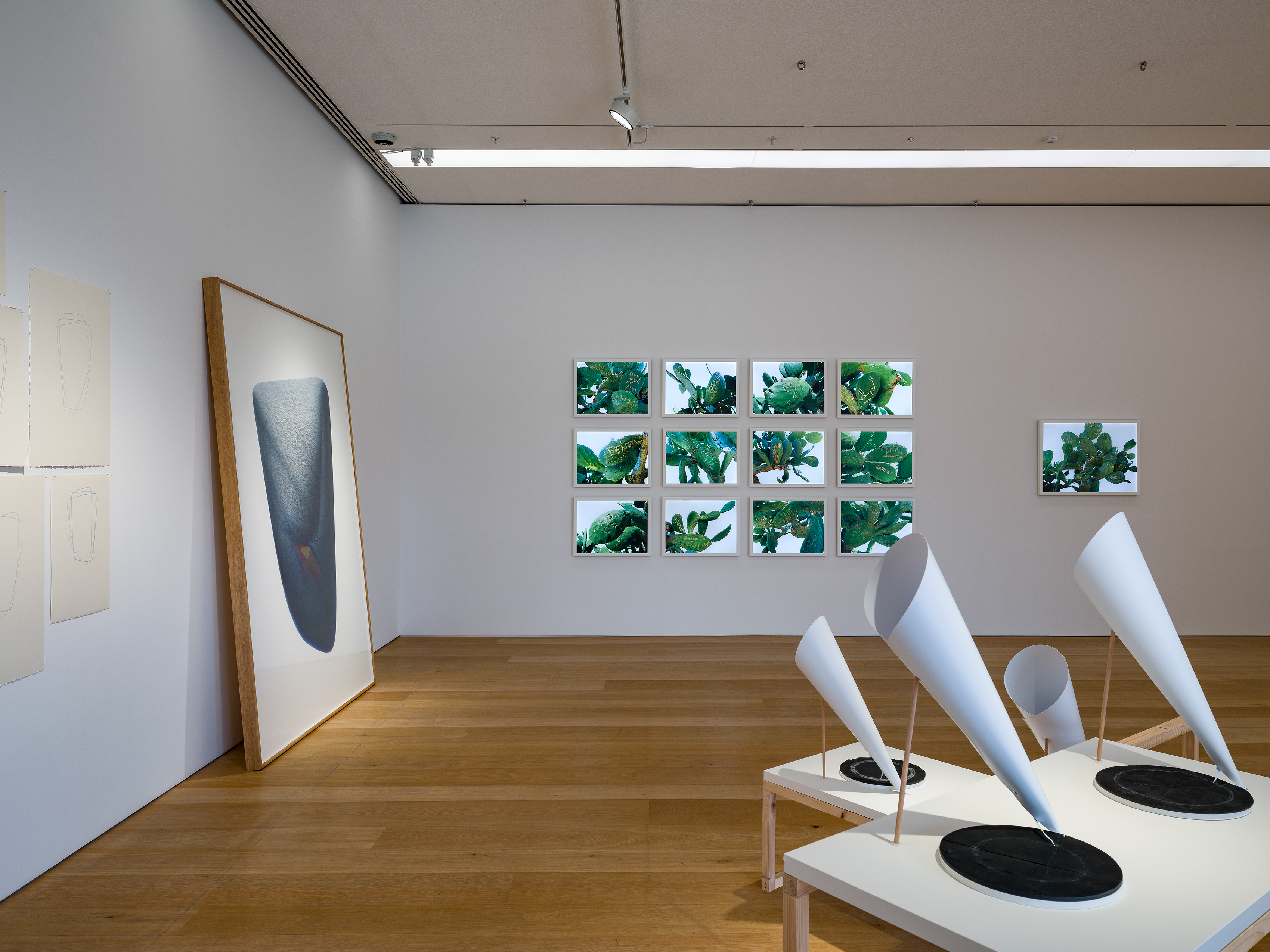

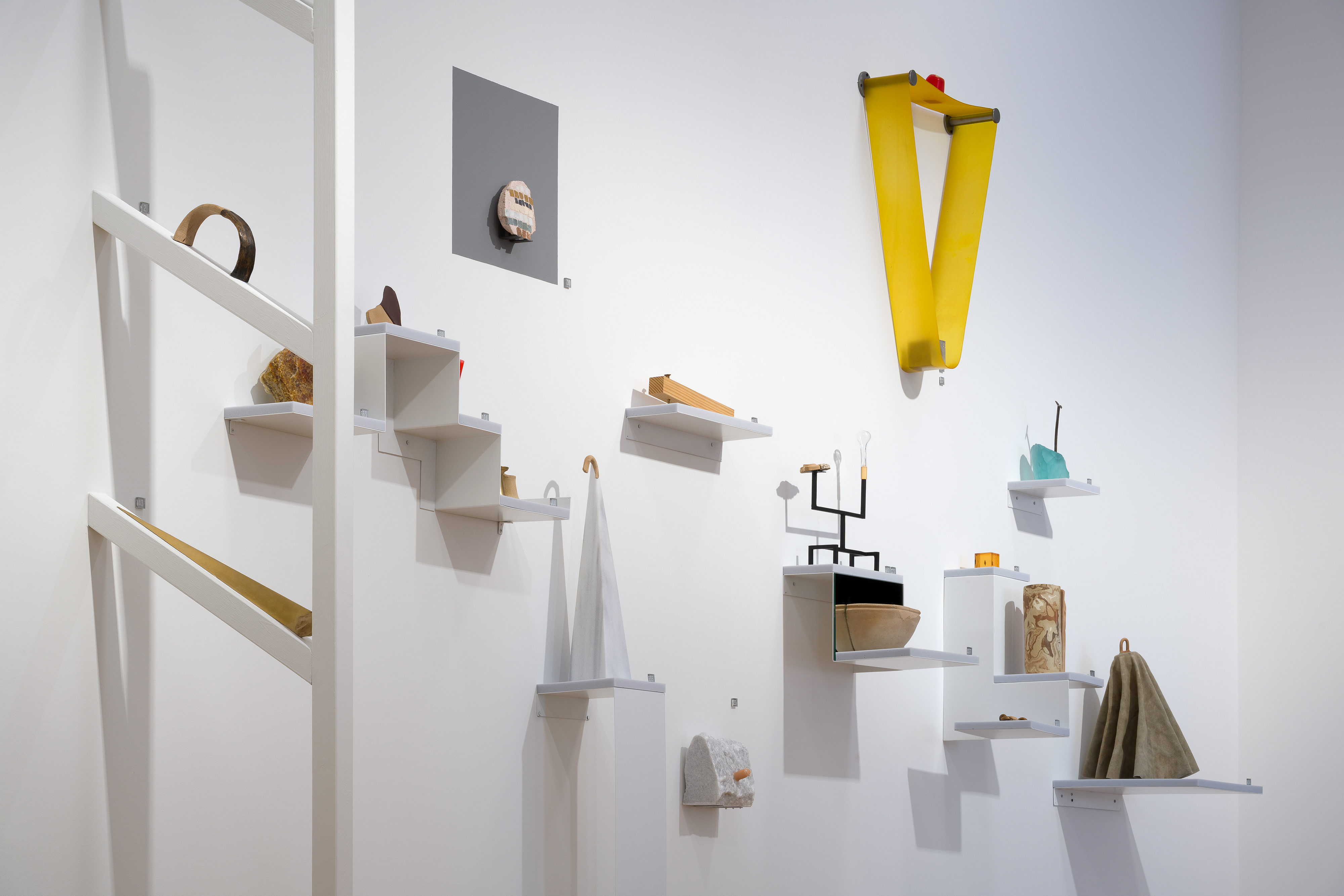
The exhibition “Work in Progress” (Yapım Aşamasında: Arter), which questions how an art space can be defined through the gestures of artworks and how it can embrace them, has opened. The exhibition, whose first section will be on view until October 4, extends beyond the building, spanning two floors of “Space for Art,” established in 2010 and presented to the public as “the tradition of the future” in art history, as well as the buildings minus third-floor foyer. Curated by Emre Baykal, the celebratory exhibition brings together 27 artists and 39 works with an inventory that also includes the institution’s collection. The exhibition, whose first section’s book has been prepared by Süreyyya Evren and Emre Baykal, will in its second section publish its own story as a book.

A Structure at Arter That Says “Enough is Enough” to the Tradition of the Future / Evrim Altuğ
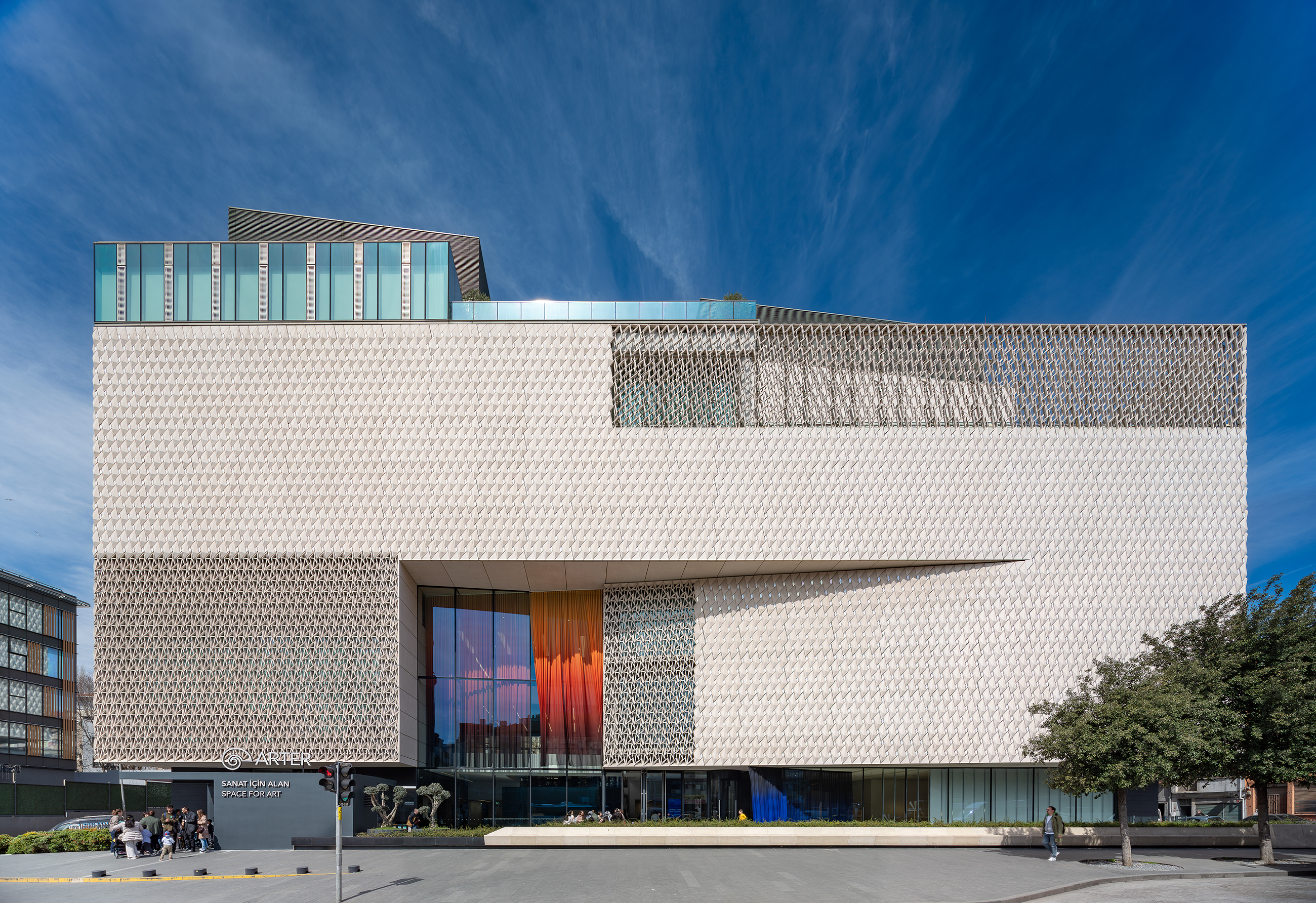
“Space for Art” Arter, a Vehbi Koç Foundation institution entering its 15th year, has opened its doors to a two-phase contemporary art exhibition organized by a team led by curator Emre Baykal between April 1, 2026 and March 14, 2027. The exhibition, titled “Work in Progress,” presents 39 works by 27 artists as an experience and memory proposal dispersed vertically across the building’s floors.
The exhibition brings together selected works from over 300 pieces—whose production was supported within Arter’s exhibitions programme, initiated in its first building on İstiklâl Avenue in 2010 and has continued in Dolapdere since September 2019, with some later added to the Arter collection—with new productions created specifically for this exhibition.
The exhibition is presented to the audience with the support of Koç Holding on the occasion of the 100th anniversary of the Koç Group, and it is stated that in the second phase of the event in October 2026, many of the works seen in the first phase will be replaced by different works. With this approach, the new book that will accompany the second phase of the exhibition is expected to prioritize documenting the “Work in Progress” exhibition rather than the institution’s activities. Speaking of the book, the exhibition catalogue “Work in Progress,” published by Arter Publications as number 102, also bears the signatures of Baykal and Süreyyya Evren. In this context, the book, which holds art-historical value, can also be sealed as an accelerated yet closely examined history of Arter.
The first phase of the exhibition “Work in Progress,” which explores how an art space can be expressed through the gestures of artworks and how it can embrace them, will be on view until October 4.
The exhibition extends beyond the building, covering two floors of “Space for Art,” established in 2010 and offering “the tradition of the future” to the public within art history, as well as the foyer on the building’s minus third floor. In this context, and at the cost of repetition for documentary purposes, it should be noted that Murat Akagündüz, Volkan Aslan, Can Aytekin, Fatma Bucak, Aslı Çavuşoğlu, Nermin Er, Cevdet Erek, Ayşe Erkmen, İnci Furni, Babak Golkar, Deniz Gül, Eric Hattan, Emre Hüner, Gözde İlkin, Ahmet Doğu İpek, Sejla Kameric, Esen Karol, Ali Kazma, Lucia Koch, Hans Peter Kuhn, Nuri Kuzucan, Füsun Onur, Yasemin Özcan, Sarkis, Serkan Taycan, Canan Tolon, and the VOID initiative enrich the exhibition.
To quote carefully, as curator Baykal also states, the exhibition “brings together some of the works produced within the scope of the institution’s past exhibitions, both distant and recent, this time within a context that also encompasses Arter’s institutional history, and places them within a broader universe in which they establish new statements, proximities, and collaborations together.”
With curatorial support provided to Baykal by Sena Danışman and Delfin Öğütoğulları, the exhibition “Work in Progress,” extending to the building’s ground, minus one, and minus third-floor foyer spaces, resembles a tribute-like ceremony where many works are assembled for the sake of the structure. As elements such as architecture, transcendence, memory, void, and appreciation shift between the works and their signatures, the viewer may experience a sense of being taken on a transcendent journey within the memory of the building they move through, via these “memory” objects that are gradually made more selective and operative. The building greets its visitors, even before they enter, with “Dolapdere Suite” by Lucia Koch, integrated into its exterior façade. Koch’s intervention initiates a discussion on how we can simultaneously embrace both chaos and order, as a calm visual narrative directed both at the exterior and the interior of the building. Born in 1966 in Porto Alegre, Brazil, Koch’s “Dolapdere Suite” from the “Air Temperature” series can also be experienced as an emotional cloak tailored to the building’s monochrome woven mass.
Nermin Er’s “Pool Temperature” (Havuz Isısı), also placed on the atrium wall at the building entrance, reinforces the metaphysical vision of existence that Koch establishes within and outside the structure. As two abstractions—paintings created within an architectural formation—these works also offer two lyrical and generous fragments of the exhibition’s imaginal manifesto.
At the entrance of the exhibition at “Space for Art” Arter, in Gallery 0, one can observe how all kinds of void, detail, surprise, and confidences that “things” entrust to one another accumulate. Among these works, which rest on each other through their formal and aesthetic contrasts, Füsun Onur’s architectural, geometric, minimal, and illusionistic work “Untitled,” experienced in Gallery 0 and Gallery -1, re-emerges three times within its own existence in 1972, 2014, and 2026. While “Untitled” once again celebrates Onur’s skill in engaging with space, it also reminds us how this play is surrounded by weighty expressions and radical questions. As in many of her works, this piece by Füsun Onur again carries a sense of trust and surprise that opens itself to the world at the level of the viewer’s curiosity, as well as a degree of architectural provocation.
The works in “Work in Progress” generally function like a corporeal and abstract chorus of praise dedicated to Arter’s “reincarnation” through the former Otokoç building. Even if silence partially gives way to the “object” solo performances proposed by the works to the viewer, for example, the 2016 work “Bruit Blanc” by the “VOID” initiative, attributed to Arnaud Eeckhout and Mauro Vitturini, can also pleasantly occupy the exhibition as an acoustic and empathetic response to Dolapdere’s flowing landscape. When we look at “Work in Progress” as an exhibition in which the visitor tests the nakedness and sincerity of the image, and where the sense and scale of void meticulously challenge each work, it becomes perceptible after a while, within a feeling of visual harmony, how Fatma Bucak’s 2013 work “Omne Vivum Ex Ovo – Nomologically possible, anyhow,” also in Gallery 0, Emre Hüner’s arrangement “Untitled Aggressive Mimetic,” or Ayşe Erkmen’s work “Blue Stone” in Gallery -1, enter into a kind of spiritual companionship with one another. Showing great sensitivity in her works to materials that can be described as the costumes of time and to architectural propositions that can be described as the homes of ideas, Erkmen once again consolidates this consistency in the same exhibition with her “Plexiglass Sculptures” in Gallery -1, spanning from 1969 to 2019.
“Work in Progress,” which Baykal undertakes to construct with the meticulousness of an aesthetic orchestra conductor, indeed smiles at the notion of “art for art’s sake,” particularly as a gesture of respect toward the image’s own existence; however, by also recognizing the proposition of “art for the structure” within an art-historical sense of wonder, it allows us to experience the temporal possibilities that matter carries.
The exhibition, which almost invariably pairs works together yet can just as easily leave them to their own devices within their psychoreographies, takes care not to set the works against each other or reduce the visitor to a depressive mediator. In a sense, it investigates the possible modes of existence of objects through their own memory propositions—much like Esen Karol does with her photographic series “Otokoç.” Among those undertaking such inquiries, Babak Golkar’s “Olası Müşterek Varoluşlar İçin Mekânı” (Space for Possible Shared Existences) becomes a clear testament to the structural and optical adjustments that can be made between tradition and the future, delivered with a small hiccup of motif. Amid the enchantments produced by these deliberate sensory interruptions, painter Murat Akagündüz explores the imaginative potential of the image through patient evolution, simultaneously diminishing and multiplying it, in his “Kaf” canvases. Similarly, sculptor Deniz Gül, following the same line of reasoning, constructs one of the boldest witness traps in Gallery -1 with his 2011 work “Balkon”—an ungrounded, unglamorous piece that, precisely for that reason, aspires toward the metaphysical.
When we look again at this atmosphere, which turns the exhibition into a cultural album filled with Arter’s plastic “selfies” that have granted many aesthetic memories to its short life, Can Aytekin’s “Teras 2, Merdiven 1, Koridor 2” (Terrace 2, Staircase 1, Corridor 2), Serkan Taycan’s installation “Zaman Kemeri” (Time Belt), Ali Kazma’s exhibition documentary or photographic series carrying the wit of “Nuh’un Gemisi” (Noah’s Ark), and Volkan Aslan’s gesture of saluting the labor routine of his hero with an Anatolian folk song, along with Şahin Kaygun’s flavorful portrait “Bir Hafta” (One Week), all transform the same sense of responsibility into jewels. The exhibition at Arter, where Nuri Kuzucan’s simple images move through Cevdet Erek’s “ses imgeleri” (sound ornaments), also succeeds in embracing, in the most critical and productive manner possible, the sense of alienation produced by the object on the subject.
For information: arter.org.tr