30.01.2025
We may have left the medical pandemic behind, but now we face a new outbreak—this time from the digital world. While there is no official medical term for the countless hours spent on social media, its negative emotional and cognitive effects are becoming increasingly evident in today’s world. The latest trending term for this phenomenon is “Brain Rot.”
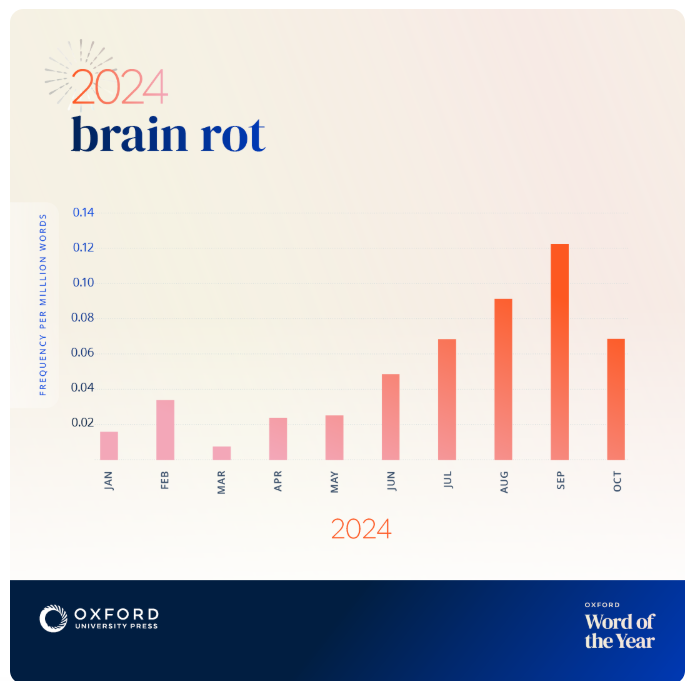
Brain rot occurs when individuals consume excessive amounts of trivial, non-challenging online content. It is described as a decline in cognitive and intellectual ability. This term has gained traction as a way to express concerns about the overconsumption of low-quality digital content, particularly on social media. Many experts argue that neurological problems caused by excessive social media usage have led to the adoption of this term in academic literature. Researchers suggest that social media platforms, by presenting idealized lifestyles and sensationalized narratives, distance individuals from reality, encourage unnecessary social comparisons, and contribute to feelings of inadequacy. This fosters perfectionism and negatively impacts self-esteem and mental health. According to reports, the use of the term “brain rot” has increased by 230% between 2023 and 2024, following its recognition as Oxford Dictionary’s Word of the Year.
Reducing digital consumption by taking intentional breaks from screens is essential. Avoiding phone use first thing in the morning and before bed can help maintain mental clarity. Avoiding multitasking by focusing on one task at a time allows the brain to enter deep focus mode, enhancing efficiency while reducing exhaustion. Regular exercise is one of the best ways to maintain brain health. Experts point out that walking in nature, in particular, helps clear the mind and increases happiness by releasing dopamine and endorphins. Another important factor in preventing brain rot is ensuring a healthy sleep pattern. Aiming for at least 7-8 hours of quality sleep each night is vital for the brain’s well-being.
First used in 1854, the term “brain rot” refers to the harmful impacts of today’s digital environment, particularly social media, on our brains. In other words, exposure to these impacts increases the risk of brain rot. However, being aware of this danger and taking preventive measures can contribute to safeguarding mental health. Building a mindful relationship with technology is important for preserving brain health over the years.
References
İdikut Özpençe, A. (2024). Brain rot: Overconsumption of online content (an essay on the publicness social media). Journal of Business Innovation and Governance, 7(2), 48-60.
https://doi.org/10.54472/jobig.1605072
https://corp.oup.com/news/brain-rot-named-oxford-word-of-the-year-2024/
https://www.researchgate.net/publication/388185103_Beyin_curumesi_cagimizin_en_buyuk_bas_belasi
https://www.deryauluduz.com/dijital-dunya-ve-beyin-curumesi-alarmi/
https://www.aa.com.tr/tr/analiz/sosyal-medyada-beyin-curumesi-tehlikesi-nasil-korunulur/3428460