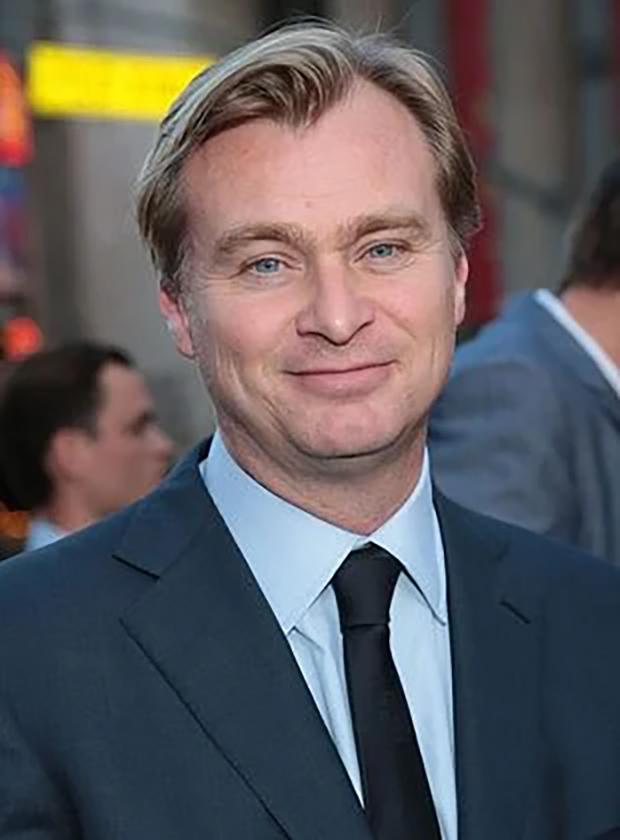
Every Christopher Nolan movie has earned critical acclaim while also inspiring endless discussion. The endings of his movies have been analyzed and debated for years. With The Odyssey once again placing him in the global spotlight, Nolan has established himself as one of the century’s most gifted filmmakers, known for his meticulous approach to complex storytelling.

The Endless Legend of Cinema’s Knight, Nolan / Demet Cengiz

Christopher Nolan is more than a director. His movies have broken box office records, making him one of the world’s highest-grossing directors. He is the recipient of two Academy Awards (Oscars), two BAFTA Awards, and a Golden Globe, was appointed a Commander of the Order of the British Empire, and was knighted for his contributions to cinema. Now, let’s take a closer look at Sir Christopher Edward Nolan, born in London on July 30, 1970.
His English father, Brendan James Nolan, worked as an advertising executive, while his American mother, Christina, was both a flight attendant and an English teacher. Holding both British and American citizenship, Christopher Nolan spent his childhood between London and Chicago. He is the middle child in a family of three boys. While his younger brother Jonathan Nolan, a frequent collaborator in many of his films, is widely known, much less is known about his older brother, Matthew Francis Nolan, who has a criminal record.
HE MADE A MOVIE AT THE AGE OF SEVEN
At just seven years old, he began making short movies with a Super 8 camera borrowed from his father. Like many children his age, he was a devoted Star Wars fan, and by the age of eight he had completed his animated movie Space Wars. Using Apollo images given to him by his uncle, who worked at NASA, he imagined himself traveling through space and making space-themed movies. He was also a great admirer of the movies of Ridley Scott and Stanley Kubrick. By the time he was eleven, he was certain that he wanted to become a director.
During his teenage years, he began making movies with brothers Adrien and Roko Belic. Together, they directed Tarantella (1989). He later worked on several documentaries. In the credits of the Belic brothers’ 1999 Academy Award-nominated documentary Genghis Blues, Nolan was credited for editorial assistance.
After attending private schools, Nolan studied English Language and Literature at University College London (UCL). He directed the short movie Larceny (1995). After graduating, he worked as a script reader, camera operator, and director of corporate videos and industrial movies. In 1997, he directed his second short movie, Doodlebug.
BREAKTHROUGH WITH MEMENTO
Nolan’s first feature-length movie, Following (1998), which he also produced, was made on a remarkably modest budget of just £3,000. The entire cast consisted of his friends, and filming could only take place at weekends. He wrote the screenplay and also served as the cinematographer. The movie won several awards and received widespread praise, with critics describing its young director as “a major talent.” Nolan, however, criticized the British film industry for its “club mentality,” saying he had never received the support he deserved.
Nolan’s breakthrough came in 2000 with Memento. Inspired by his brother Jonathan’s short story “Memento Mori,” he crafted a screenplay that unfolded in reverse chronological order. Produced with a budget of $4.5 million, the movie received widespread acclaim and numerous honors, including Academy Award and Golden Globe nominations. A defining directorial voice of the new century had emerged. Many more successes would follow.
Following the success of Memento, several producers recommended Nolan to direct Warner Bros.’ psychological thriller Insomnia (2002). Although he was still a young and relatively inexperienced director, he delivered both critical and commercial success. If Memento showcased his talent, Insomnia became the movie that changed the course of his career.
Nolan faced several disappointments along the way. Some screenplays he had worked on for years were set aside after he realized similar movies were already in production. He also stepped away from projects that closely resembled his earlier work. At the final stage, he declined to take the director’s chair for Troy, one of Hollywood’s most ambitious productions.
THE DARK KNIGHT THAT AWAITED THE PRESTIGE
Nolan and Warner Bros. came together to develop a new Batman movie, giving rise to the now-legendary Batman trilogy. With a more dramatic take on the story, Nolan reinvented the franchise. Batman Begins (2005) was a major box office hit and appealed to audiences well beyond the superhero genre.
Taking a break from the Batman trilogy, Nolan directed The Prestige (2006), a movie about the lives of two rival magicians. The movie earned two Academy Award nominations and grossed $109 million worldwide.
The Dark Knight (2008), the second movie in Nolan’s Batman series, is considered one of the finest movies of the 2000s and one of the greatest superhero movies ever made. It surpassed $1 billion at the global box office while earning eight Academy Award nominations. The movie won Best Sound Editing and Best Supporting Actor, with Heath Ledger receiving the latter for his portrayal of the Joker posthumously after he was found dead at his home six months before its release.
THE DARK KNIGHT CHASING DREAMS
Following Nolan’s success with the Batman series, Warner Bros. joined forces with him to bring Inception (2010) to the screen. The movie, about dream travelers, is still discussed today for its ambiguous ending. It grossed over $820 million worldwide, earned eight Academy Award nominations, including Best Picture, and took home the Oscar for Best Cinematography.
In 2012, Nolan directed the third and final Batman movie, The Dark Knight Rises. Although he was initially hesitant to return, he agreed after developing a story with his brother Jonathan and David S. Goyer. Inspired by Goyer’s idea of presenting Superman in a modern context, Nolan pitched Man of Steel to Warner Bros. Produced by Nolan, the movie was a box office success upon its release in 2013, although it received mixed-to-negative reviews from critics.
FAME REACHES INTERSTELLAR
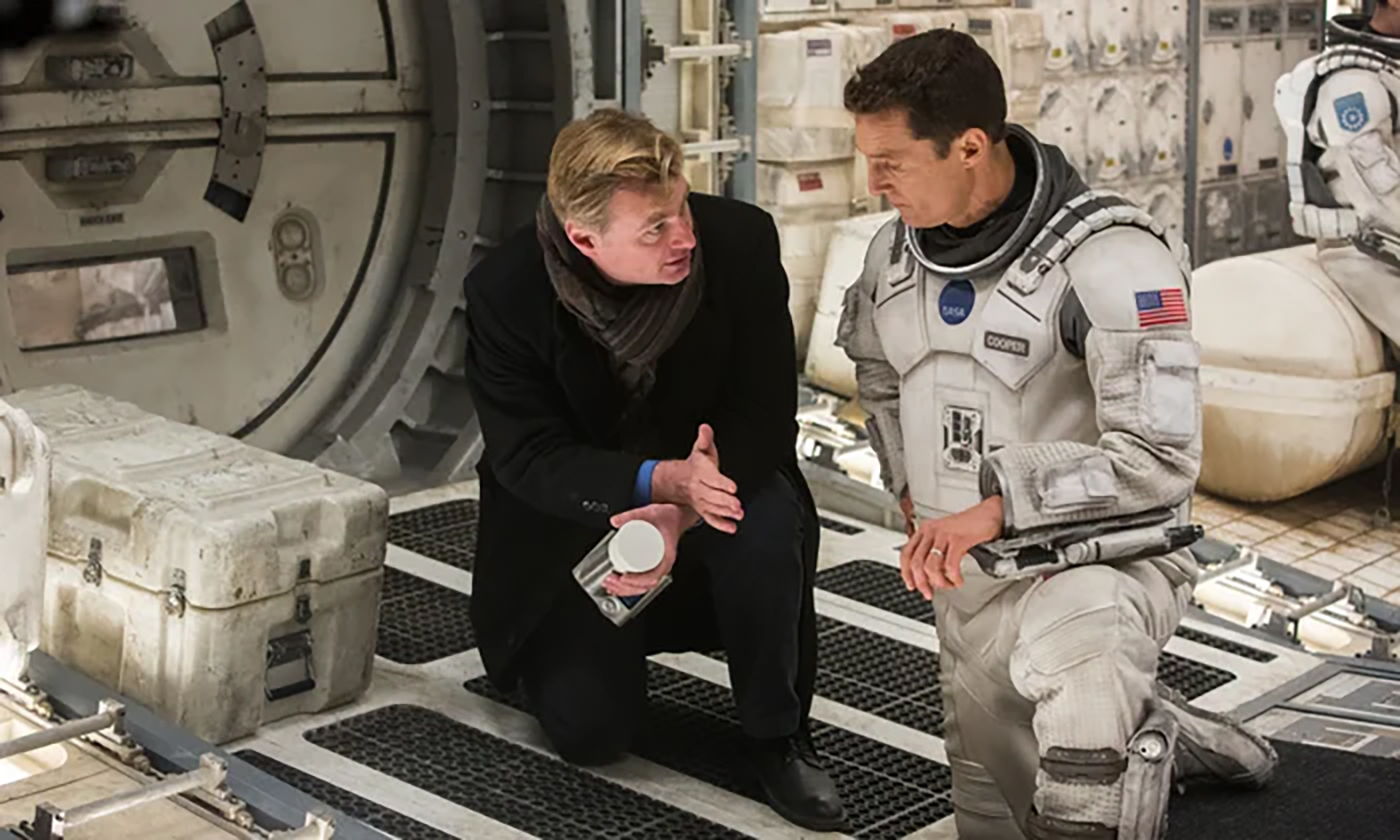
Next came Interstellar. Released in 2014, the movie grossed over $670 million worldwide and became one of the year’s most talked-about releases. The initial treatment and screenplay were written by Jonathan Nolan, with input from numerous experts in astrophysics. It went on to receive five Academy Award nominations and won the Oscar for Best Visual Effects.
Together with his wife, Emma Thomas, Nolan worked as an executive producer on Batman v Superman: Dawn of Justice (2016). A year later, audiences around the world eagerly awaited Dunkirk. Once again, Nolan delivered a movie that achieved both commercial success and critical praise.
Released in August 2020, Tenet was widely expected to help revive the movie industry, which had been severely affected by the COVID-19 pandemic. Nolan wrote, directed, and produced the movie alongside his wife, Emma Thomas.
By the time 2023 arrived, Oppenheimer had already become one of the year’s most anticipated movies. Upon its release, it sparked both acclaim and criticism but still emerged as the third highest-grossing movie of the year. At the Academy Awards, Nolan finally took home the Oscars for Best Director and Best Picture.
By announcing his movies well in advance and ensuring substantial budgets for their promotion, Nolan demonstrates that he believes not only in the power of talent but also in the importance of presenting a project effectively. He knows the rules of the game, changes the ones he can, and follows the ones that cannot be changed without compromise.
And finally, The Odyssey. Introduced two years before its release, the movie dominated headlines, with everything from its cast and filming locations to its filmmaking techniques and exhibition format becoming the subject of intense debate. When it opened on July 17, its arrival was nothing short of triumphant—reminiscent of a victorious commander’s grand entrance into a conquered city. It broke record after record, revitalized a movie industry that had been fighting to recover, and drew even those who had abandoned theaters back to the box office.
A METICULOUS CREATIVE MIND
Nolan is so obsessive about his work that he prohibited UGG boots on the sets of his last two movies because he believed they disrupted the atmosphere he was trying to create.
Nolan is never reluctant to build large-scale practical sets or devote months, even years, to research before beginning a project. For Inception, for instance, he had rotating sets built to create the illusion of weightlessness, drawing inspiration from the rotating platforms used in Stanley Kubrick’s 2001: A Space Odyssey.
Nolan is celebrated—and often debated—for his unconventional storytelling, distinctive visual effects, experimental sound design, and interconnected themes that bring together science, physics, and metaphysics. His movies regularly examine existentialism, ethics, the nature of time, memory, the changing nature of personal identity, personal growth, the hero’s journey, and the idea of homecoming. He is equally recognized for favoring traditional film stock over digital cameras and for advocating its preservation.
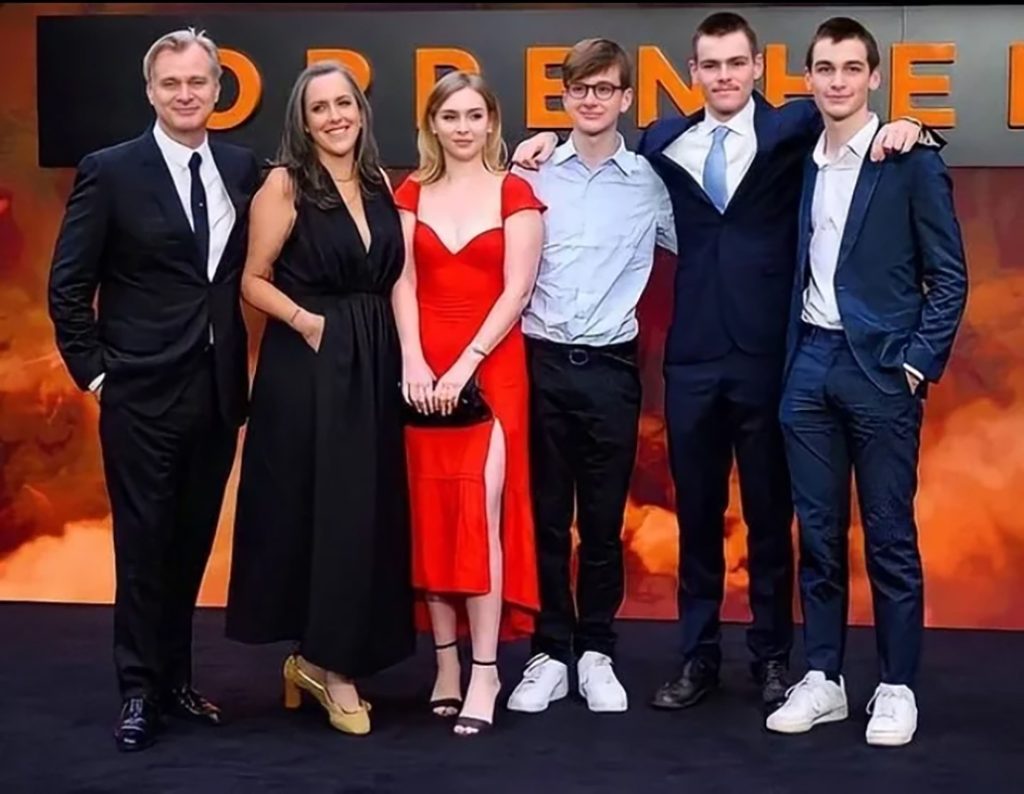
Since 1997, Nolan has been married to Emma Thomas, and together they have four children. They continue to collaborate both professionally and creatively. While directing ambitious, large-scale movies, he has never hesitated to make commercially driven ones as well. He has always placed great value on intelligence, yet never looked down on money or fame.