It almost feels as though the old Chinese curse, “May you live in interesting times,” has come true, doesn’t it? Because we truly are living in extraordinary times in every sense.

Be Careful Who You Follow / İpek Durkal


Ours is a world turned upside down, where social media has made everyone “famous” in one way or another, and where these “celebrities” are applauded with near-frenzied devotion by their followers under any circumstances, with even their mistakes defended passionately.
The concept we once knew as admiration has given way to following in today’s world.
In the normal order of things, admiring someone meant appreciating—or aspiring to—their success, character, ideas, or perhaps something inspiring about them; in other words, there had to be at least one genuinely positive quality that earned our admiration. But the rules of being a “follower” are different.
None of these criteria are necessary for people to follow a “celebrity” on social media. Whether they are a scammer, a supporter of violence, a murderer, or simply uninformed, people can end up embracing even their most reprehensible behavior.
But why?
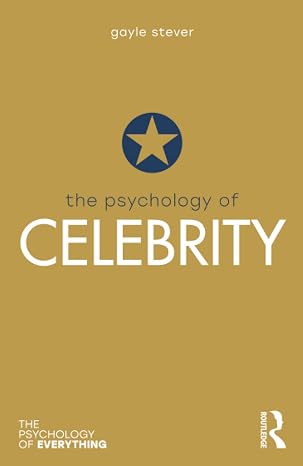
American media psychology professor Gayle S. Stever, best known for her research on celebrity culture, fandoms, and particularly the one-sided (parasocial) bonds people form with celebrities and fictional characters, provides perhaps the clearest answer in her book The Psychology of Celebrity.
Since its publication in 2018, the book has guided a wide range of research on the subject. (Although it has not yet been translated into Turkish, readers can still access its content through AI-assisted translation, as I did.)
Fame Is One Thing, Celebrity Is Another
Stever’s first point in the book is to separate “fame” from “celebrity”. She defines fame as “being recognized through achievement,” while explaining celebrity as a condition in which people’s attention is focused less on accomplishment and more on who someone spends time with, what they wear, and how they live. She underlines that these are fundamentally different concepts.
According to Stever, people tend to see qualities in the celebrities they become attached to that reflect aspects of themselves. They feel that the person they aspire to be is represented by that celebrity. As they shape their identities, they look for role models and develop a sense of belonging. As Stever explains, “People we follow over a long period can come to feel as though they are part of our social circle.” In psychology, this is known as the mere exposure effect: the more often we encounter something, the more trustworthy and likable it tends to seem.
As Stever also emphasizes, the relationships we form with celebrities often reveal more about ourselves than about the celebrities themselves.
When a “celebrity” comes under criticism—even if they have committed a serious offense—we may instinctively defend them, argue in their favor, and interpret criticism directed at them as a personal attack, without even considering its substance. This is where the situation becomes concerning. In psychology, this problematic pattern is referred to as Celebrity Worship Syndrome, and it can have a significant negative impact on our personal development and overall well-being.
This brings me to a passage from The News by another writer whose work I deeply admire, Alain de Botton. In the book’s chapter on “Admiration,” he observes that underlying our fascination with celebrities is a commitment to personal development and the belief that we need exceptional people as role models if we are to become better versions of ourselves. Out of the hundreds of celebrities surrounding us, we should choose those who genuinely deserve our attention—those whose conduct and accomplishments inspire us to live happier and more successful lives.
Now it’s worth asking ourselves again: Who do we choose to follow, and for what reasons? What does this “celebrity admiration” bring into my life, and what does it quietly take away?