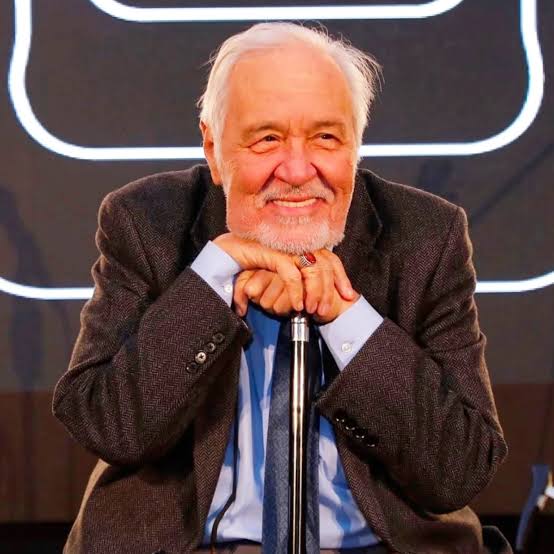
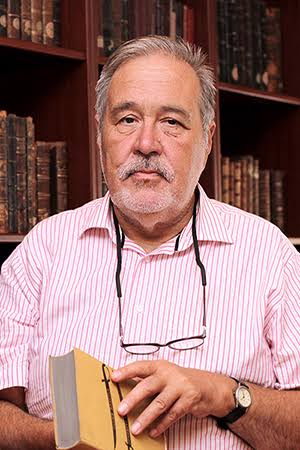
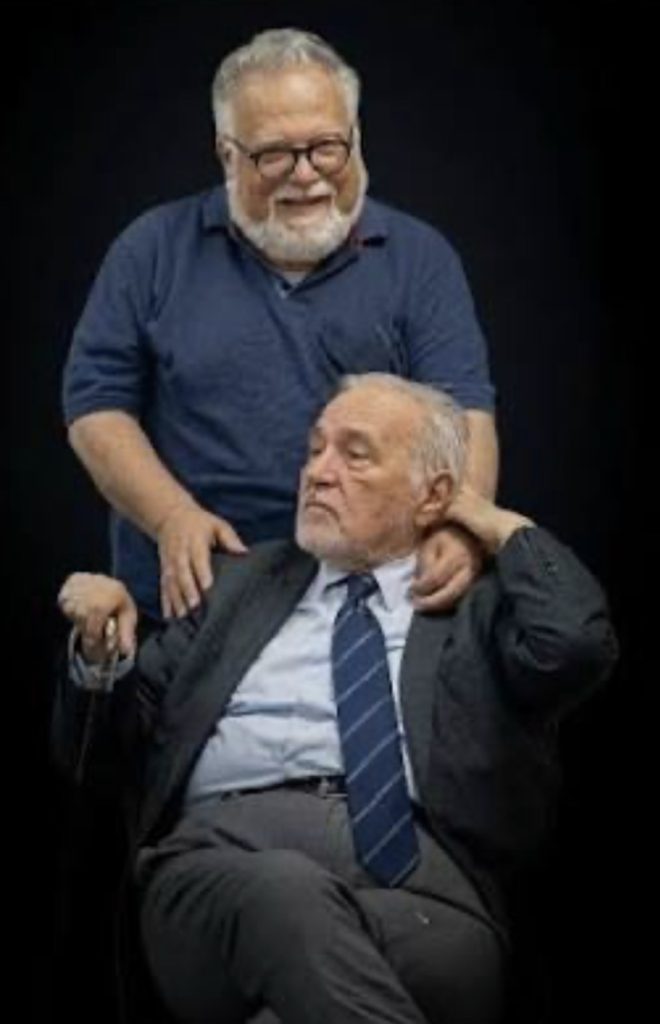
Historian, academic, and author İlber Ortaylı… A man who has become “Professor İlber” to everyone, who has inspired millions to love history and science, earned a special place in people’s hearts, and embodied knowledge and seriousness without ever losing his sense of wit. A truly exceptional figure.

İlber Ortaylı: The Prince of History / Demet Cengiz
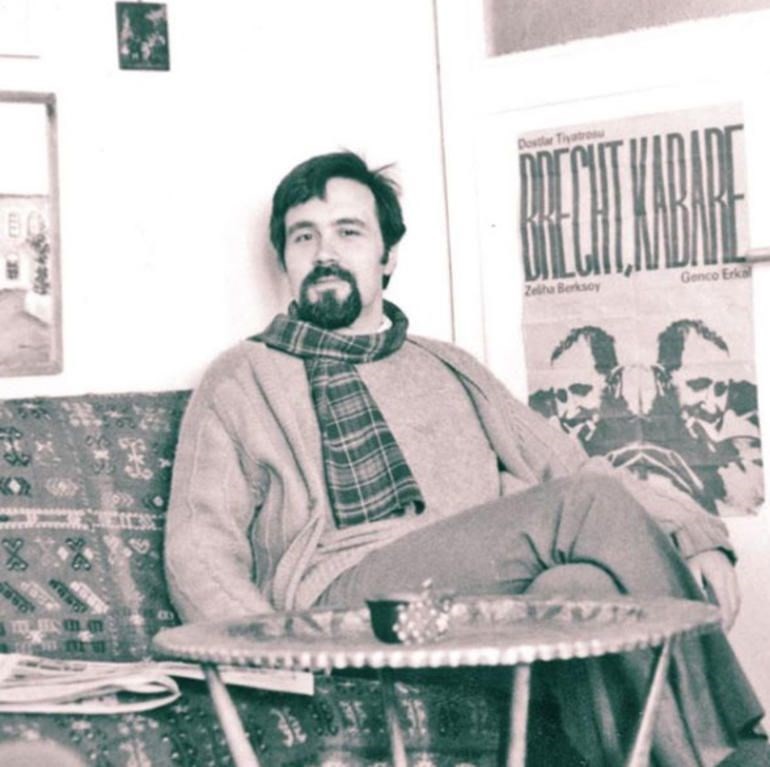

It is remarkably difficult to capture a person who knows history in both its broadest sweep and its finest details; who makes the most unexpected particulars fascinating; who illuminates forgotten corners with the light of his knowledge; who adapts to the modern world with surprising ease; and who approaches life with both courage and generosity, never losing his appreciation for enjoyment. Prof. Dr. İlber Ortaylı is a truly exceptional individual who has sparked a passion for history and drawn millions first to television screens and later to online platforms.
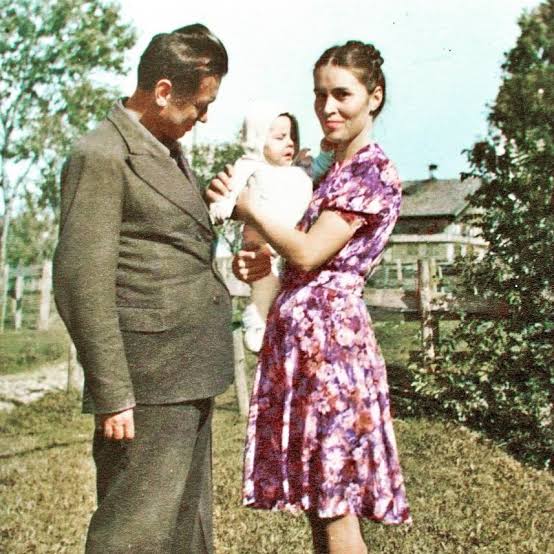
Born on 21 May 1947 in Bregenz, Austria, İlber Ortaylı was the son of Crimean Tatar parents. The city was then under Allied occupation. His mother, Şefika Karaşay from Akmescit, and his father, Kemal Ortaylı from Kefe, came from distinguished Crimean backgrounds. Şefika Ortaylı was a member of the Karaşay family, one of Crimea’s leading mirza families, and was also connected to the Şirinski lineage, a noble Crimean family that had been granted princely rank by the Tsars. Despite the difficult circumstances of her time, she studied Russian language and literature in Stalingrad. Escaping the hardships and pressures of the time, the family had established themselves in Austria. Şefika Karaşay married Kemal Ortaylı, who hailed from Ortay village near Kefe, in the Alberschwende camp close to Bregenz. When İlber Ortaylı was two years old, the family relocated to Türkiye. Kemal Ortaylı, an aeronautical engineer, translated several works and articles on Crimean history and the Crimean Tatars into Turkish. Meanwhile, his mother pursued a long academic career in the Department of Russian Language and Literature at Ankara University’s Faculty of Language, History and Geography. İlber Ortaylı has three siblings: Enver, Emeldar, and Nuriye.
A Student of Great Masters
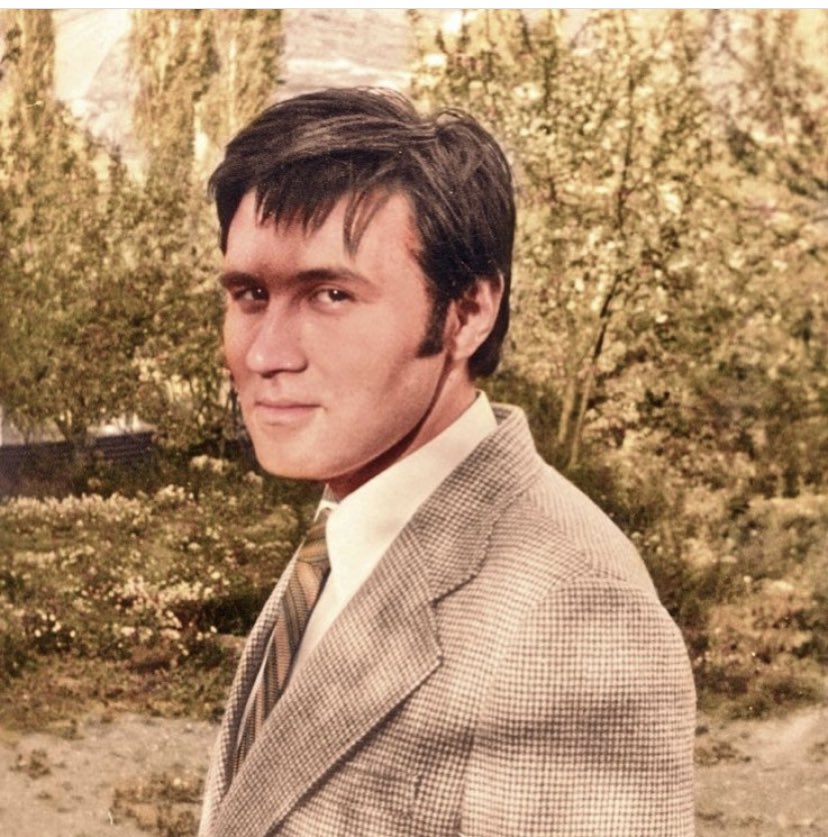
Turkish, German, and Russian were spoken in the household where İlber Ortaylı grew up. He completed his primary and secondary education at the Austrian High School in Istanbul before graduating from Ankara Atatürk High School in 1965. While engineering was the preferred profession within the family, he chose to study history instead and enrolled in Ankara University’s Faculty of Language, History and Geography. There, he studied under distinguished scholars such as Halil İnalcık, Şerif Mardin, Mümtaz Soysal, Seha Meray, İlhan Tekeli, and Mübeccel Kıray. After graduating in 1968, he continued his studies in Slavic and East European languages at the University of Vienna.
Ortaylı pursued his master’s degree at the University of Chicago, where he studied with Halil İnalcık. He received his Ph.D. in history from Ankara University’s Faculty of Political Sciences in 1974 with a dissertation entitled Local Governments after the Tanzimat. In 1979, he was promoted to associate professorship on the basis of his work German Influence in the Ottoman Empire. The period was marked by significant political unrest in Türkiye. Objecting to increasing pressures on universities, he resigned in 1982. Before returning to Türkiye in 1988, he lectured, conducted seminars, and participated in academic conferences at universities across Vienna, Berlin, Paris, Princeton, Moscow, Rome, Munich, Strasbourg, Ioannina, Sofia, Kiel, Cambridge, Oxford, and Tunis.
The Man Who Remembers Everything
Returning to Türkiye in 1988, Ortaylı began working as an associate professor at Middle East Technical University. He later returned to Ankara University’s Faculty of Political Sciences, where he attained the rank of professor the following year. Until 2002, he chaired the Department of Administrative History and later continued his academic career as a visiting faculty member at various universities, among them Galatasaray University and Bilkent University.
Fluent in German, Russian, English, French, Italian, Persian, and Latin, Ortaylı fascinated those around him with his remarkable aptitude for languages. Renowned for his extraordinary memory, he came to be known as “the man who remembers everything.”
In 2005, İlber Ortaylı’s reputation started to extend well beyond the world of academia. That year, he became Director of the Topkapı Palace Museum, a role he held for seven years until his retirement due to age regulations.
A distinguished member of numerous academic institutions, Ortaylı was an honorary member of the Turkish Historical Society, the Turkish Academy of Sciences, and the Macedonian Academy of Sciences and Arts. He also served as an honorary professor at the Institute of Oriental Studies of the Russian Academy of Sciences, held an honorary doctorate from the Institute of History of the Azerbaijan National Academy of Sciences, and was a member of the Board of Directors of the International Committee of Ottoman Studies. In addition, he belonged to the European Society for Iranian Studies and the Austrian–Turkish Science Forum, while also serving as an advisor to the Ministry of Culture and Tourism.
Everyone’s “Professor İlber”
His personal library contained more than 30,000 books written in various languages. He donated 5,000 of these volumes to Galatasaray University. Unfortunately, a significant portion of the collection was destroyed in a fire that broke out in 2012.
Among his many interests, he had a special affection for his collection of miniature automobiles, assembled over the course of a lifetime that began in childhood.
İlber Ortaylı inspired millions of people to appreciate history, a subject often regarded as dull by many. He wrote for newspapers and magazines, appeared regularly on television, and, judging by audience ratings, attracted a remarkably large viewership. Yet when we say that he fostered an interest in history and science, we mean far more than simply drawing people to their screens. He contributed to a rise in the sales of history books and encouraged many young people to pursue history as a field of study in academia.
He did not resist the language of the digital age; instead, he added it to the many languages he already spoke and found a way to connect with younger generations. He responded with good humor to the jokes, memes, and playful references inspired by him. He became everyone’s “Professor İlber,” offering valuable lessons about life not only through television screens but also from conference stages. A lover of nature, a traveler who preferred the open road, endlessly curious about the world, a gifted conversationalist, fond of solitary journeys, devoted to olive groves, an opera enthusiast, serious yet mischievous—he embodied a rare combination of intellectual depth and human warmth.
Thousands Came to Pay Their Respects
Millions regarded him as one of their own, yet he also had a small family of his own. In 1981, he married Ayşe Özdolay, the daughter of Dr. Talip Özdolay, a senator from Mersin. The couple separated in 1999. Their daughter, Tuna, was born in 1982. While he was “Professor İlber” to countless people, he was also a grandfather to two grandchildren.
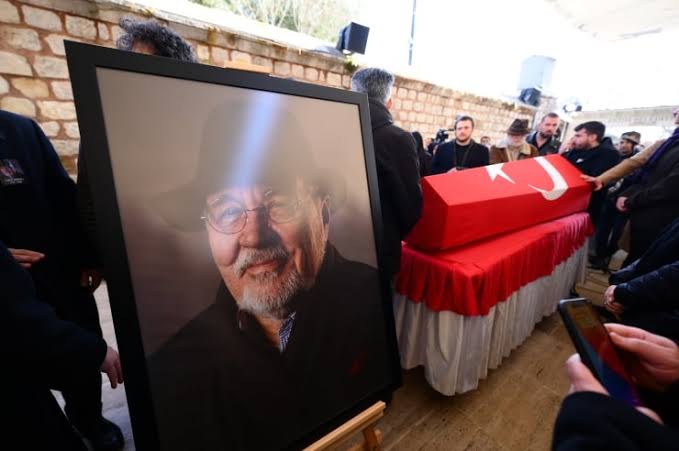
After struggling with health problems, İlber Ortaylı passed away on 13 March 2026, leaving behind the life he had lived with remarkable passion. A memorial service was held at Galatasaray University on 16 March, followed by funeral prayers at the Fatih Mosque, as he had requested. He was buried in the mosque’s cemetery, the final resting place of both his cherished teacher Halil İnalcık and Prof. Dr. Semavi Eyice, the historian he referred to as “the memory of Istanbul.” Thousands gathered to bid him farewell. People of all ages and backgrounds filled the streets of Fatih, united in their respect and affection for a truly exceptional individual.