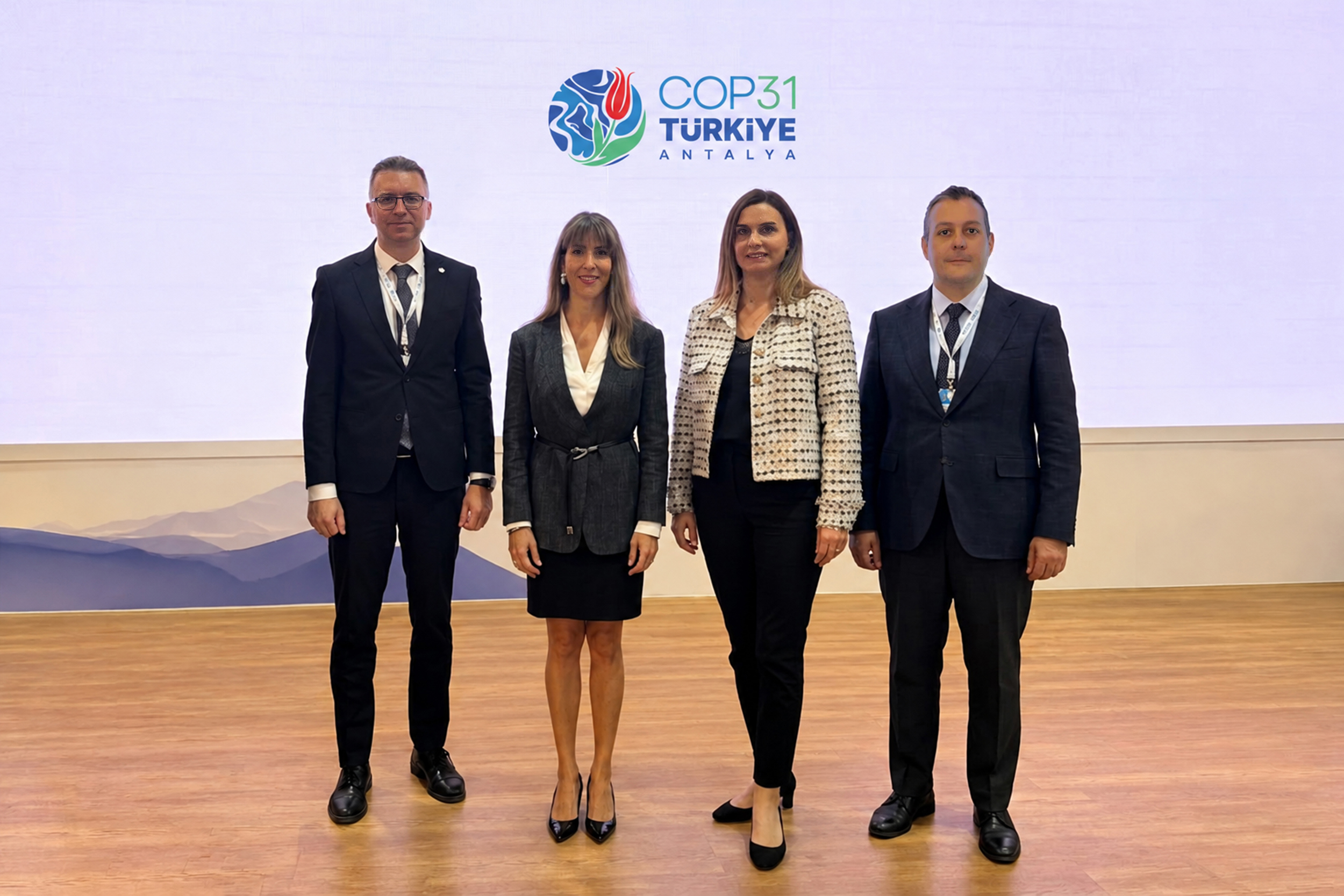
Arkas executives discussed the green transformation of ports, alternative fuels, climate finance, and the blue economy at COP31, held in Antalya. With the support of Arkas, the Burhan Öçal Quartet performed as part of the conference’s cultural and arts programme.
As part of the United Nations Climate Change Conference (COP31), Arkas took part in six separate events held on 16 and 17 November. During the sessions attended by Arkas executives, the implementation of solutions aimed at reducing emissions in shipping and the financing of the transition were discussed.
Green Ports and Alternative Fuels
At the panel titled “Green Ports and Maritime Decarbonisation: From Climate Commitments to Implementation,” organised by Türk Loydu in the Blue Zone on 16 November, participants discussed the role of shore power, energy infrastructure, and operational safety in the low-carbon transformation of ports. Speaking at the panel, Alp Çapa, Vice President of the Ports and Terminal Services Group at Arkas Holding, emphasised that technology investments alone are not sufficient for the green transition of ports, and that energy infrastructure, safe operational continuity, vessel-port compatibility, and financing models must be planned in an integrated manner. Çapa also pointed out that the real success of electrification and shore power investments should be assessed not by installed capacity alone, but by actual utilisation and measurable emissions reductions.
On the same day, the panel “Fueling the Maritime Transition: Biofuels, Carbon Pricing and Business Strategy,” organised by Garanti BBVA in the Green Zone, focused on the use of alternative fuels in existing fleets and the impact of carbon costs on the maritime sector. Seçkin Gül, General Manager of Arkas Bunker, noted that regulations such as CII, the EU ETS and FuelEU Maritime have made carbon costs a significant component of maritime operations. While highlighting biofuels as one of the viable emissions-reduction options for existing fleets, Gül shared examples from the pioneering biofuel operations of Arkas Bunker, the first bunker company in Türkiye to obtain ISCC EU certification, as well as the company’s experience in delivering low-carbon fuel solutions.
On the same panel, Aylin Saul, Director of Credit at Arkas Holding, stated that ESG (Environmental, Social and Governance) finance serves as a binding force that integrates financing with environmental and social policies, underscoring that a strong ESG framework contributes to a company’s sustainable and healthy growth.
Speaking at the panel, Serra Tükel, Sustainability Director at Arkas Line, noted that Arkas Line was the first company in Türkiye’s maritime sector to use ISCC EU-certified biofuel. Tükel stated: “The use of biofuels constitutes an important part of our decarbonisation roadmap in maritime shipping. However, to accelerate the sector’s green transition, we need not only technological solutions but also predictable international regulations, investments in alternative fuels, and accessible financing mechanisms that support these investments.”
In the UN Global Compact Portugal session, Tükel shared concrete examples from the pioneering efforts of Arkas Line and Arkas Bunker in promoting the use of biofuels in Türkiye’s maritime sector, illustrating how the private sector can act as a driving force in the development of public policies through innovative practices.
Financing the Green Transition and the Blue Economy
At the panel titled “Financing the Maritime Decarbonisation in Türkiye and the Mediterranean: Ports, Fleets and Green Corridors,” organised by the European Bank for Reconstruction and Development (EBRD) and the Delegation of the European Union to Türkiye on 17 November, participants discussed access to finance for low-carbon maritime investments. Speaking at the panel, Seçkin Gül noted that one of the key challenges facing the transition is making projects bankable and scalable from the perspective of financing institutions. Gül also emphasised that, alongside investments in vessels, support is needed for bunkering infrastructure, storage capacity, and the broader supply chain.
Serra Tükel noted during the EBRD panel that carbon has become a significant cost item for shipping companies and that Arkas Line actively manages it as a financial risk. She also emphasised that aligning the regulations of the EU, the IMO, and Türkiye is critical
Serra Tükel shared her views on the protection of marine ecosystems during the event titled “Ocean with David Attenborough: From Hope to Action, Special Screening and Conversation,” held in the Green Zone on 17 November. Tükel also pointed out that climate impact and direct contributions to marine ecosystems should be measured through separate indicators and called for scientific data on marine biodiversity conservation to be translated into concrete operational measures such as speed reduction, route adjustments, and real-time alert systems.
Later the same day, at the panel “Financing Türkiye’s Blue Economy: Building a Bankable Pipeline for Blue Bonds,” Tükel emphasised that blue finance should be based on measurable environmental outcomes. She further stated that, in addition to sustainability KPIs and ESG requirements, banks should reward strong environmental performance with more tangible financing advantages, particularly through more favourable interest-rate terms.
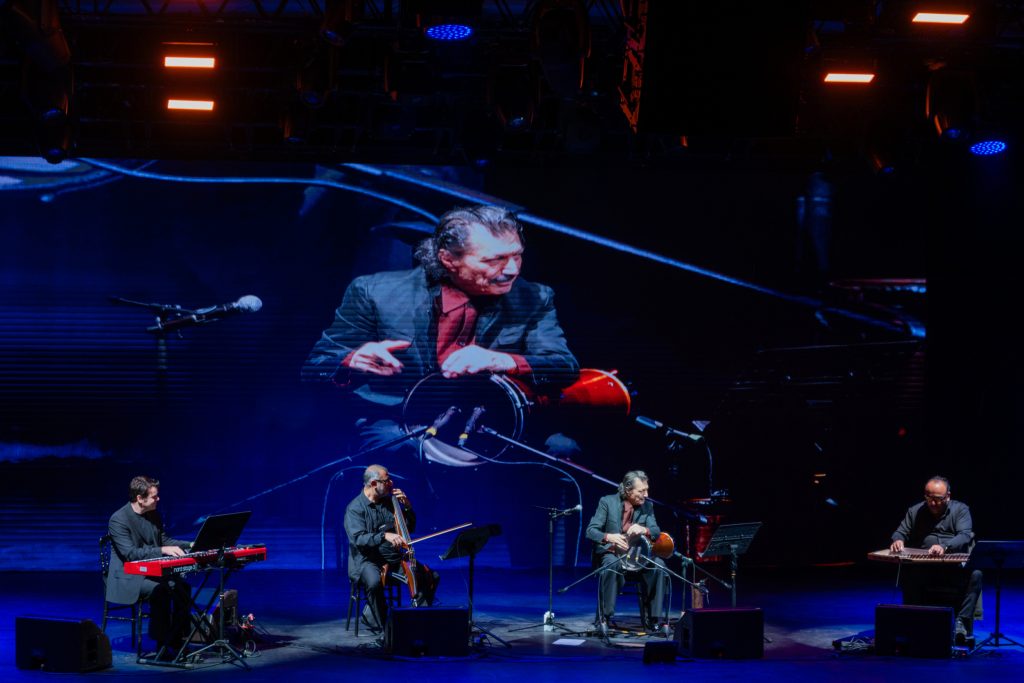
Burhan Öçal Quartet Performs at COP31 with the Support of Arkas
As part of the COP31 cultural and arts programme, Burhan Öçal, one of the leading international representatives of Turkish music, met with music lovers together with his Quartet on 18 November at the Folkart Small Amphitheatre in Antalya.
Held as a free public concert within the Green Zone programme with the support of Arkas, the event was among those that complemented the conference’s climate and sustainability agenda through culture and the arts.
Bringing together diverse musical traditions through his distinctive interpretation, Burhan Öçal’s performance added colour to COP31’s cultural programme while also reflecting Arkas’s longstanding commitment to supporting the arts.