I have also seen that these institutions have dreams that are not solely focused on money. On one hand, yes, the products and services they offer to humanity, as intelligent institutions that can understand the materialization of data, are always open to scrutiny. Ultimately, all of these services are systems that make us question both their privacy and our free will. As a result, this could be a food service, a transportation service, a research service, or a communication service. It could even be a social media service. At their core, since they are all based on ‘data,’ we need to place them all on the same level. So, when using these tools and services, if we, as users, can understand the intention of the producer of the tools and services, and if we are conscious users, then there is no problem. However, if we are unconscious users, of course, there is a problem. What I mean is, if we can imagine two types of users—conscious and unconscious—then we know that a conscious user can always use these systems well in their own domain.
The real question here is how we can be more conscious of these products and services, and whether art can make us more conscious in this domain. I am always asking what the questions and artworks are that would allow art to do this. If an AI can learn, can it dream? Because the way AI is used mimics reality. But what excites me as an artist is not that. On the contrary, what exists beyond reality? Therefore, it never satisfies my mind. We need to transform it and see it again, apply it. In a way, it’s a form of activism, but not in the way we know it. The first form of activism we think of is no longer the same. And it doesn’t need to be because we’ve seen, as much as we’ve researched, that the things that have existed have not created any change. So, in a new world, the way we question institutions and organizations under a new heading could, and should, change.
For example, I’m sure the six major institutions I work with are currently questioning both their data and ethical decisions. They are questioning how to do computing without harming nature. I’ve been able to measure that I have succeeded in this, and until today, I haven’t been able to measure that any activism has been able to achieve this. That is, I haven’t seen a work of art activate such a movement in the field of computing that respects data, privacy, and nature. At least not in the event invited by Macron, or at the UN. I didn’t see it in Davos either. The good news, at least, is that I can say this approach of mine ‘works.’ I can say it has an impact. Criticizing what happens to data, etc., of course, is a method. But being able to discuss the labor and its surrounding aspects is also important.
Does Refik Anadol act like a sort of ‘Trojan Horse’?
But art, it always behaves like this. Artists have always been the ‘alarm mechanisms’ of humanity. This is not something that changes. For an artist to be an artist, they must be the ‘alarm mechanism of humanity.’ They must be the compass for people. I don’t know if this is a necessity, but the feeling that comes from my heart, from within me, is that it’s important not to keep the work I do, the tools I use, the technique, the method, egocentrically to myself, but to share it. Of course, this also comes from my role as a teacher. As you know, I am also a teacher. I’m not just an artist, and my intention is not to keep my technique and my intent to myself. On the contrary, I try to express myself as much as possible. Because, although the work may remain abstract, I believe that the imagination behind it should be understood sharply.
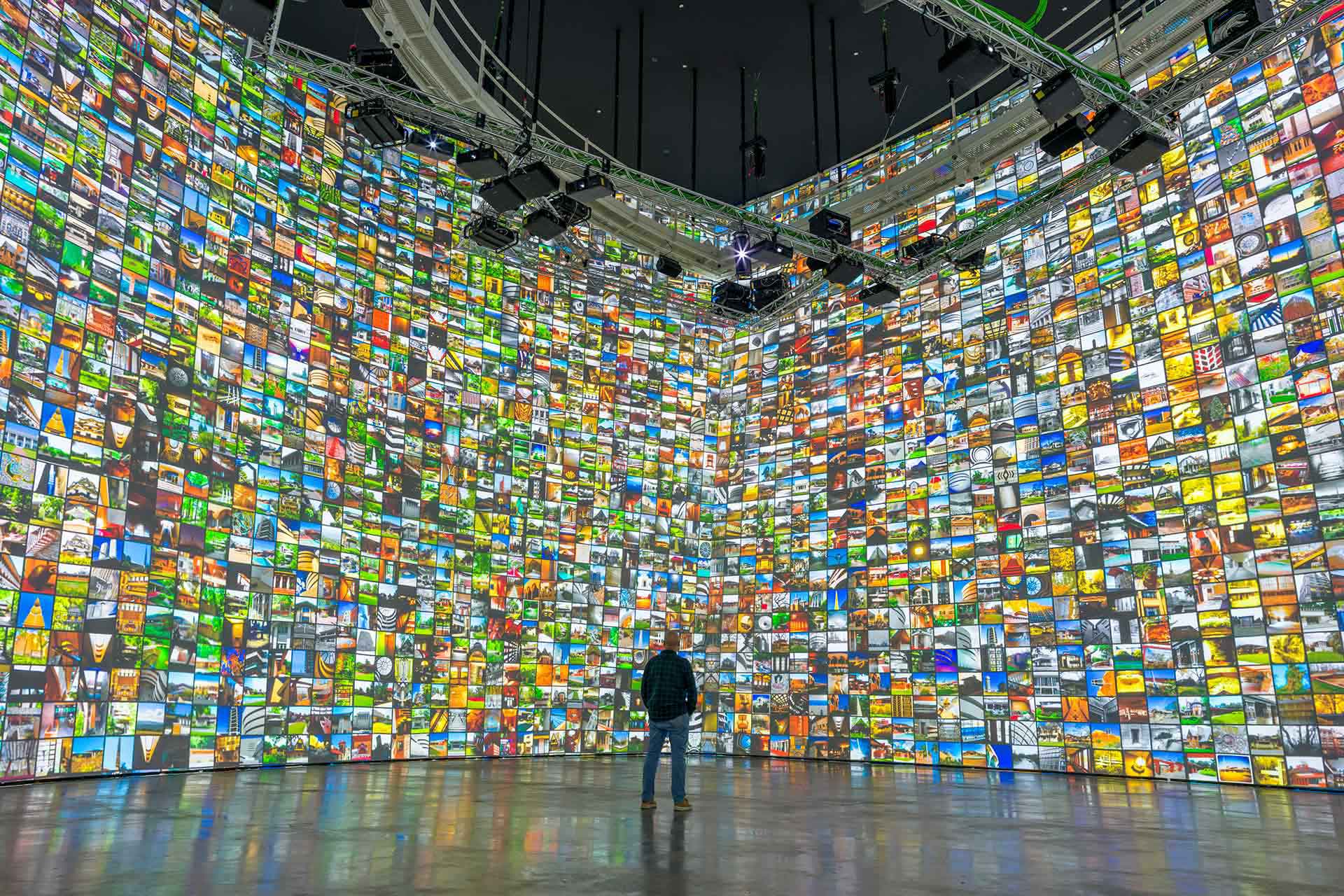
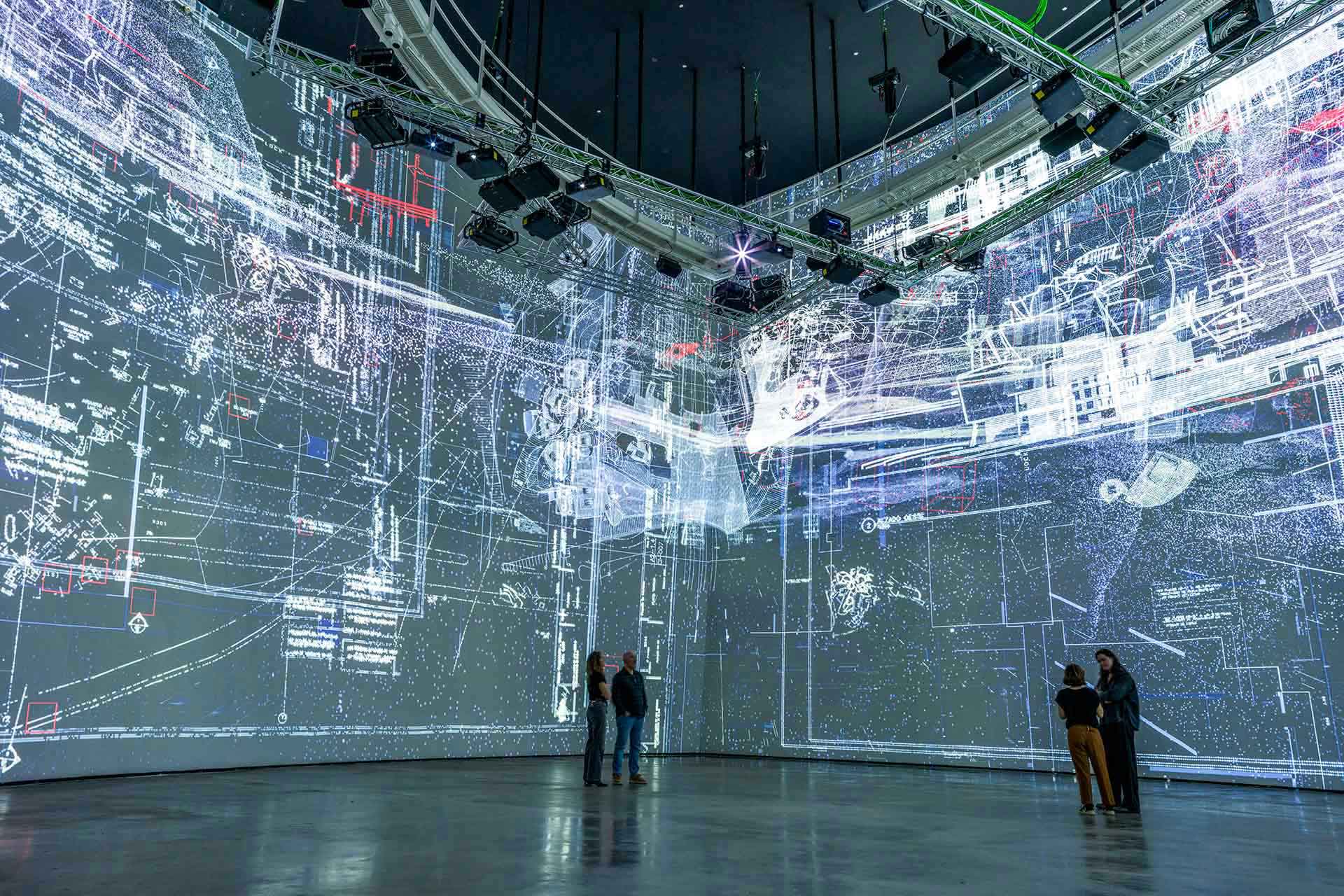
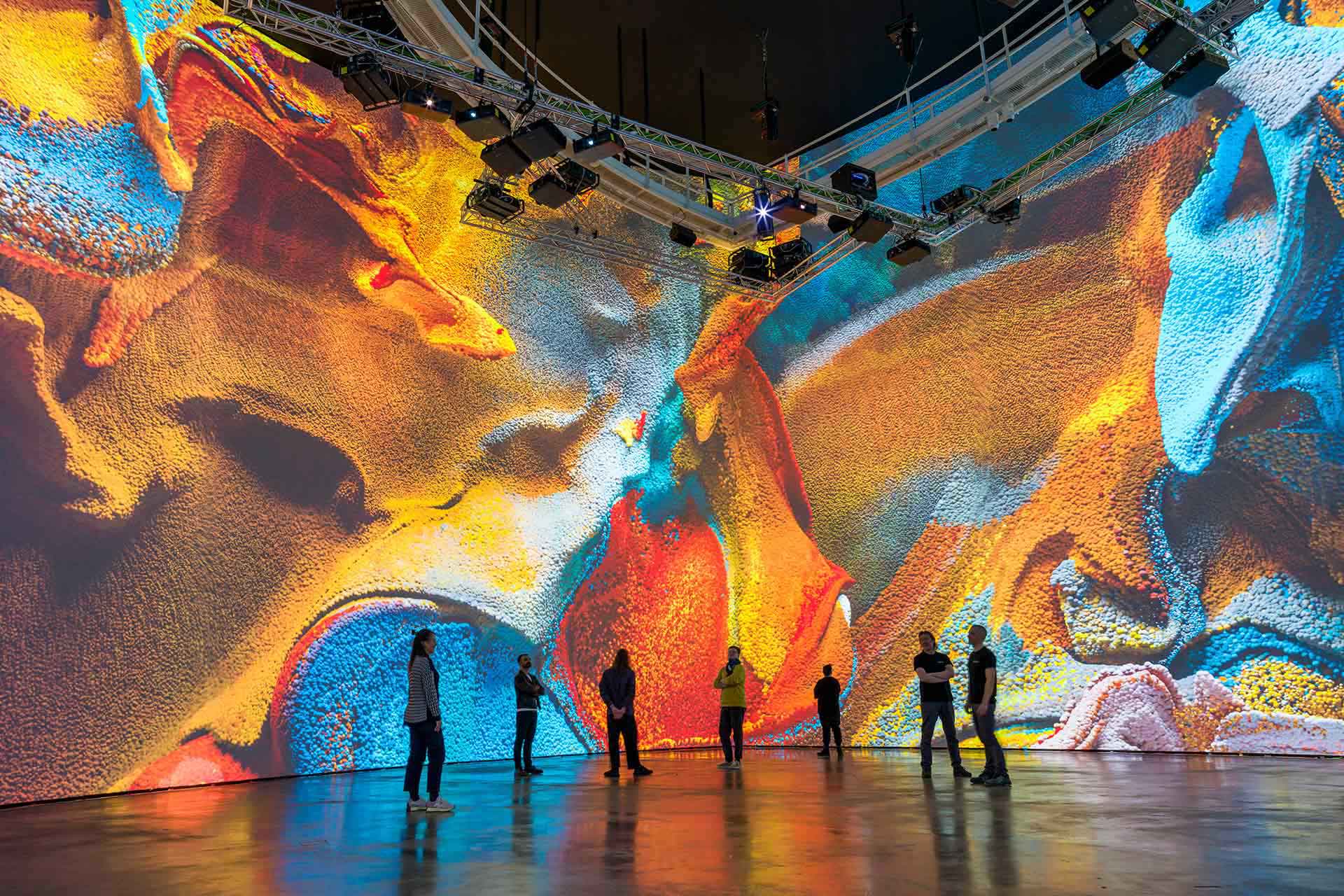
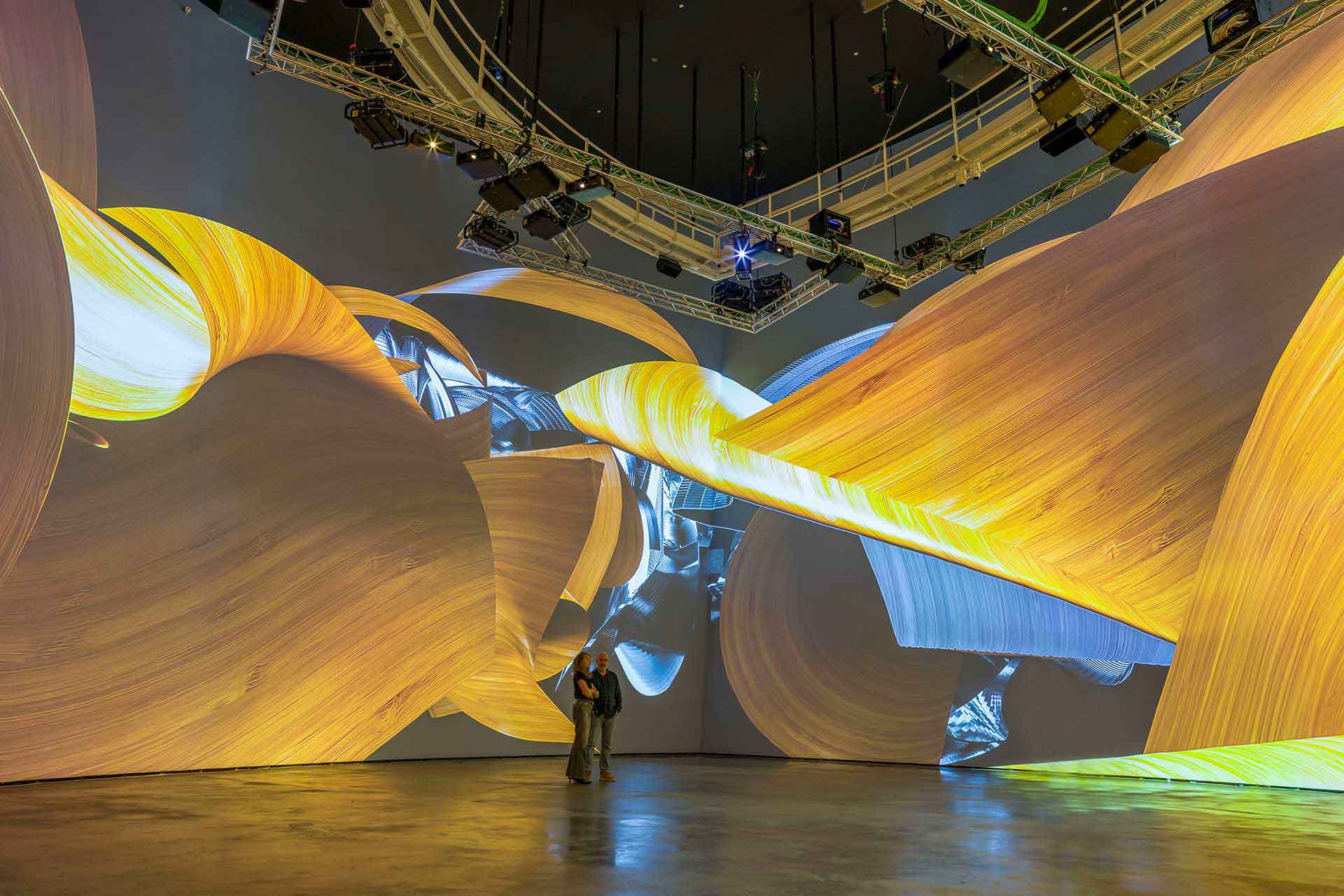
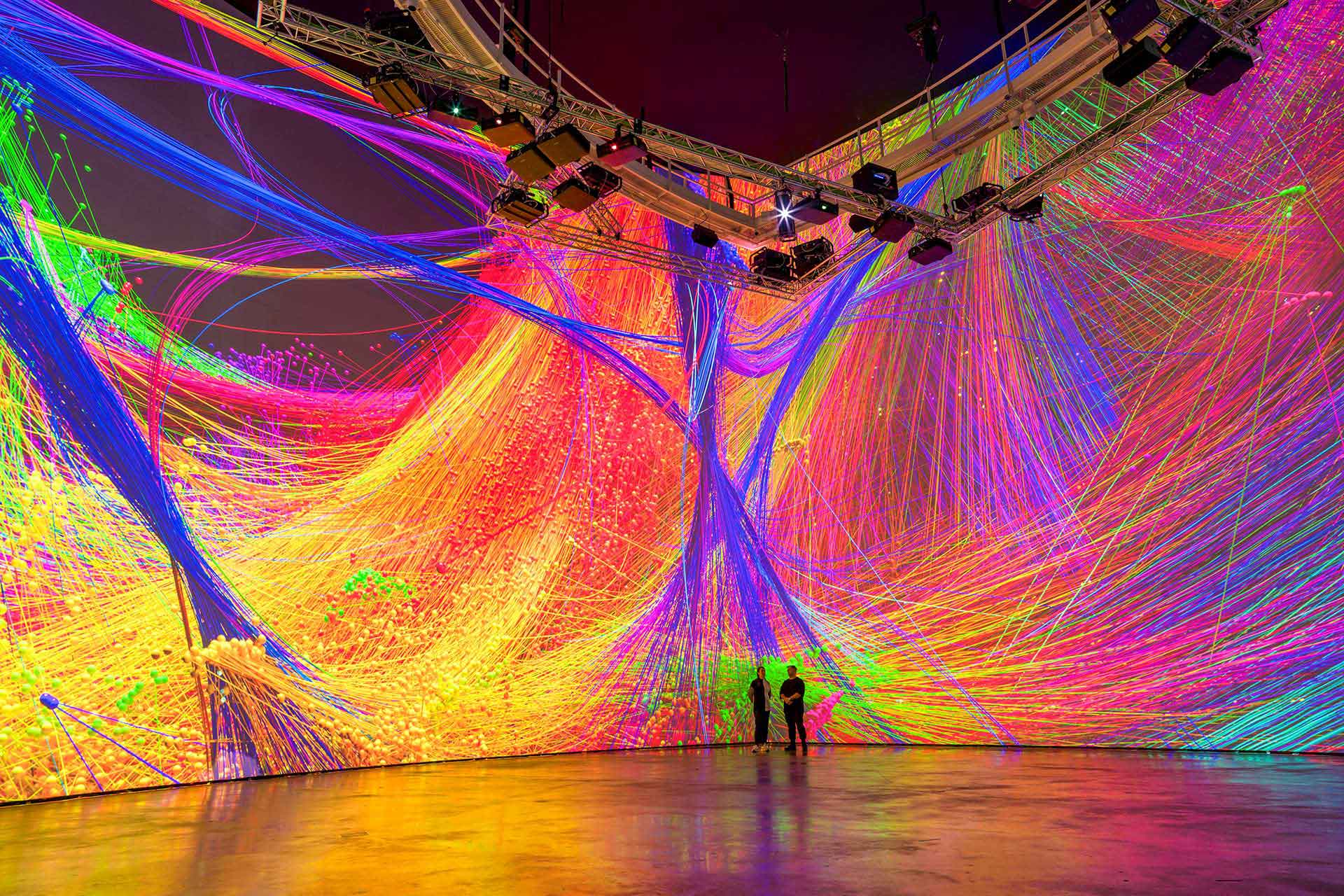
For example, more than 100 press members attended the press conference for the Guggenheim Bilbao, and there, almost everyone asked the same question. For the first time, in an art-focused press conference, we officially tried to talk about the most current problems of Europe in a way that is understandable, without looking down on them and equally. Of course, more than 10 articles that came out in response to this mostly said the same thing. We received very positive feedback. It was said that it brought transparency. By the way, I would like to suggest (American conceptual painter) Mark Rothko here. Because Rothko says, ‘My works are a space.’ I think the same way. Our works are a space, and when we go into that space, what people’s minds, souls, and thoughts encounter is important to me. Creating a safe space and being able to resolve the boundaries where the mind can be freed from fears—these could be delusions, privacy, ‘data,’ damage to nature—let’s think of a time when we can be free from all of these. What are we doing? Let’s say we solved these, because we can solve them: Right now, as humanity, we have technology in our hands. Where are we going with it? Talking about these things excites me tremendously.
Have you ever received partnership offers from institutions or individuals like Google or similar companies, or SpaceX, Elon Musk, etc., either during crisis periods or election processes for your projects?
Many, many offers have come. But I felt that there was something ‘discriminatory’ in each of them. I felt that a dream belonging to one place could not behave in varying degrees in another place. These were ideas that suggested I could ‘pontificate,’ but I didn’t want to ‘pontificate!’ My intention was to look at equally important issues for everyone, like nature. I don’t know of anything more important than nature, something that is equally important to everyone at the same time. When nature disappears and ends, nothing else will have any meaning. I couldn’t find a problem more ‘equal to everyone’ than nature, which is one of the most fundamental problems, the shared problems that form the basis of humanity, the very air we breathe. And I realized that everything else somehow, from one perspective, always creates another ‘duality.’ And if this is the life I live in this plane, I decided to spend the energy I will use not on dreams that separate, but on those that bring together, unite.
When talking about works or artists that have triggered you as role models in your understanding of production, you mentioned the minimalist conceptual contemporary painter Mark Rothko. At the same time, when I look at your works, the 1980s cult Artificial Intelligence film War Games also comes to mind. When you place your creative possibilities alongside diplomacy, are there any dreams you have built?
Actually, for the last four years, I have been working with a very valuable Amazon tribe called the Yawanawa. It’s approaching five years. I am a part of this. I have a name. They are not just any people. I have a very special bond. I am connected to them like family. I am someone who has understood and listened to their problems and, through them, the problems of the Amazon. And to solve these problems, but without speaking, to really be able to support solving them, to take action, to be able to act, last year we donated a series of artworks. And through these donations, the chief transparently presented six structures in the middle of the Amazon. One of them is a school, another is a museum, and the other is a cultural center. Last month, 400 people, who had never met before, from various tribes, sat together for the first time in the middle of the Amazon with 40 spiritual leaders, and they were able to talk about and discuss the world and life. This is one of the greatest impacts I have ever seen and discussed. I think when we consider this as ‘diplomacy,’ these 400 people were able to express their existence to the world peacefully and with good intentions. We achieved this. These people are 500, 600, 1000 people. Let’s remind again: These people are ‘very small,’ with no power we know of, but they are the best protectors of the world, unheard, far away, with no means. For us, they are the ‘ones who live in our lungs.’
As you know, ‘Esperanto,’ as a global language experiment focused on the UN, is remembered as an effort worked on in the 1950s but one that couldn’t have enough impact. If we consider that you’ve somewhat produced a ‘data language,’ do you have a dream for a common language that could be produced in the world?
Definitely, this is a very beautiful question! I truly and always say this from my heart. Truly, my dream is to find the language of humanity. But when I talk about this language, I’m not talking about the hundreds of languages, borders, or passports that we are currently using and have created. Do all cultures, nations, and countries have the possibility of having a new language thanks to Artificial Intelligence, whatever we call humanity? Does humanity have another language that we didn’t know, didn’t hear, or haven’t discovered before? For example, like nature, which we are still trying to understand, this living being that has existed for millions of years and with which we still can’t establish communication. We don’t have a language. We haven’t found the language of nature. Can Artificial Intelligence really show us the language of nature? If such a thing were to happen in this technological era we are living in, I think it would be meaningful for my feelings, dreams, and projects to somehow be a part of art. I don’t know if my lifetime will be enough. But, I can say that the intention of ‘data’ in my works is this.
Also, linguist, art critic, and academic Zeynep Sayın’s in-depth work in recent years, ‘Çizginin Boşluğu’ (The Space of the Line), which explores the languages and cultures of South American indigenous peoples, as well as the images and functions they produce, is currently on the shelves. In the book, it is explained that an Amazon tribe has a language called ‘kene,’ which has both physical and visual references, and evokes geometric and even semi-geometric abstract motifs found in computers. Could it be that the Amazon natives you’ve connected with also have a shared medical, cultural, and social language with nature?
“Actually, their songs, prayers, paintings are a kind of language for them. Of course, this is not a language in the sense we are used to. The works they create, the dreams, the music, the poems, and the experiments are a new language. But unfortunately, this has not been able to create a new memory like our publishing, academic, and information technologies. In the social minds of these people, as I said, a group of fewer than a thousand people has continuously been able to record and preserve this information, and the fact that the rubber barons stopped them for about 20 years in the late 1980s; all of this feels to me like this: There is a group of people in the Amazon who truly live with nature, who are in nature and have witnessed it, and who have understood nature for thousands of years. This is like an endless journey. Every time I go there, there is incredible wisdom. It’s so deep! Let’s put aside our hats that always look down on the other side of the world, the ones that are supposedly in control of technology, from our phones to our watches. This is a way of conversing with them and realizing how much we are lacking.